




Introduction
A finance app that fumbles a transaction or exposes a balance to the wrong user does not get forgiven twice, wherever it launches. That is the bar you are hiring against, and it is why the way you hire vibe coding developers for finance in Australia deserves more rigour than hiring for a general consumer app.
ArixLabs builds with that bar in mind. It is a FlutterFlow expert agency ranked number one globally on the FlutterFlow Expert Portal, and it uses vibe coding to move quickly on interfaces and standard flows, while experienced engineers own everything touching money, security, and compliance. That discipline, carried across 100+ shipped apps on Flutter, FlutterFlow, Supabase, OneSignal, and Stripe, is what to expect from anyone claiming to hire a vibe coder for finance in Australia. Here is how to hire well for that kind of build.
1. What's the smartest way to hire vibe coding coders for finance tools built from Australia?
Filter for evidence of financial-grade discipline, not general design flair. AI tools make it simple to prompt out a good-looking dashboard. Far fewer developers can prompt out a secure, compliant transaction flow and know exactly what needs a second look afterward.
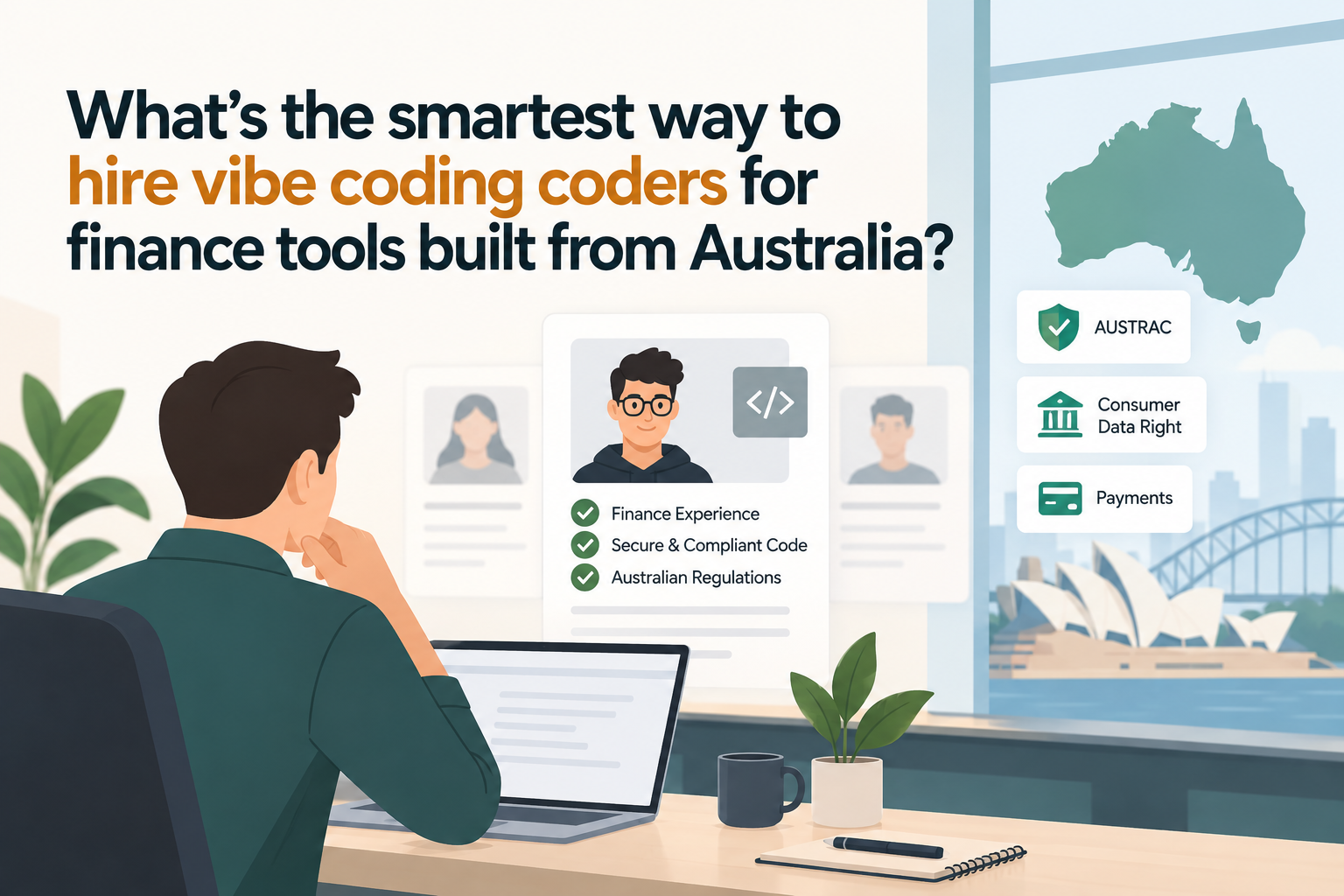
Look for three things before an interview. First, past work touching real money movement, even something as small as a billing feature. Second, a confident, specific answer about who reviews AI-generated code before it ships. Third, some awareness of Australian obligations, such as AUSTRAC requirements for anything resembling payments or remittance, or the Consumer Data Right if the product touches Open Banking-style data sharing.
When you set out to hire vibe coding developers for finance in Australia, write the job listing to reflect this directly. State that you need finance-specific experience, not general app-building skill, and name the compliance areas that matter for your product.
2. Which skills should finance vibe coding coders have for Australian compliance?
They need technical range paired with financial judgment. Producing code quickly means little if a developer does not understand why a transfer needs to be atomic or why a balance check must happen before, not after, a payment clears.
Look for:
- Experience with Stripe, Airwallex, or other payment rails commonly used by Australian fintechs
- Awareness of AUSTRAC obligations for anything resembling money transfer
- Familiarity with the Consumer Data Right if Open Banking-style sharing is involved
- Ability to review and correct AI-generated code rather than accept it as final
- Careful handling of currency and decimal precision, since rounding mistakes in money math cause genuine damage
Where should you go to find vibe coding engineers experienced in finance for an Aussie build?
Look where finance-specific technical work is visible and checkable. General freelance marketplaces suit broad searches but make real finance depth hard to confirm. Better sources include Australian fintech developer communities, referrals from other regulated-industry founders, and expert directories tied to your build stack, such as the FlutterFlow Expert Portal.
3. Does it make sense to hire freelance or outfit vibe coding engineers for finance?
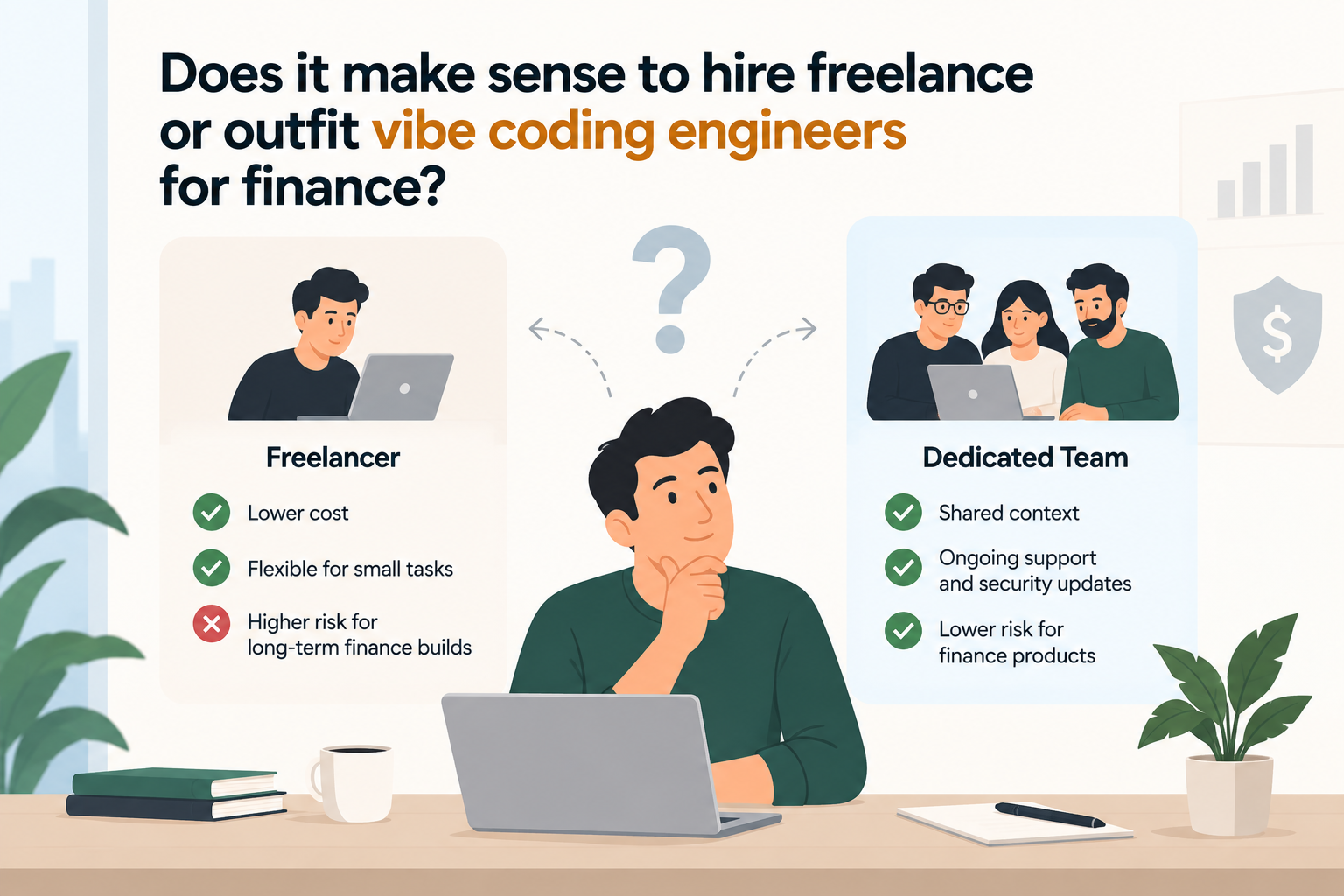
For most finance builds, an outfit is the safer choice. Finance products carry ongoing security patching, compliance checks, and audit needs that extend well past launch day. A freelancer who finishes and disappears leaves you exposed the moment a vulnerability turns up or a regulator has a question.
Freelancers still make sense for small, self-contained tasks, such as one reporting screen or a single bug fix. The risk grows once the product needs continuity: someone who understands the whole system, not just the piece they touched.
What number of coders does a finance vibe coding job need?
Most early-stage Australian finance products need a lean team of two to four people, covering front end, back end, and a dedicated reviewer for anything security-sensitive. A bigger group without one clear owner per feature tends to slow a finance build rather than speed it up.
Freelancers or a dedicated team for finance vibe coding in Australia?
A dedicated team gives shared context, backup if someone is unavailable, and one consistent review standard across every feature. A freelancer gives lower cost and flexibility for narrow tasks. For anything handling real transactions, the team route lowers risk, and firms such as ArixLabs structure teams so no client depends on one person's schedule.
4. What does it cost to hire vibe coding developers for finance?
Cost tracks scope and compliance depth more than it tracks the vibe coding method itself. A simple expense tracker costs a fraction of what a lending platform with identity checks and multi-party payouts costs. Treat any flat number offered before scoping as a rough guess.
Pricing usually follows one of three models: fixed price for a tightly defined scope, time and materials for evolving requirements, or a monthly retainer for an ongoing dedicated team. Vibe coding can shorten first-draft time on interfaces and standard logic, which sometimes lowers overall cost, but security review and compliance testing should never be the corner you cut to save money.
What should interviews cover when hiring finance vibe coding coders?
Cover a live code review rather than relying on conversation alone. Show the candidate a flawed AI-generated snippet, ideally with a subtle security or rounding bug, and watch how they find it. Ask them to walk through a security decision from a past project and defend it. Candidates who talk fluently about tools but go quiet on judgment calls are not ready for finance vibe coding developers in Australia work.
5. How do you check out vibe coding engineers for a finance project down under?
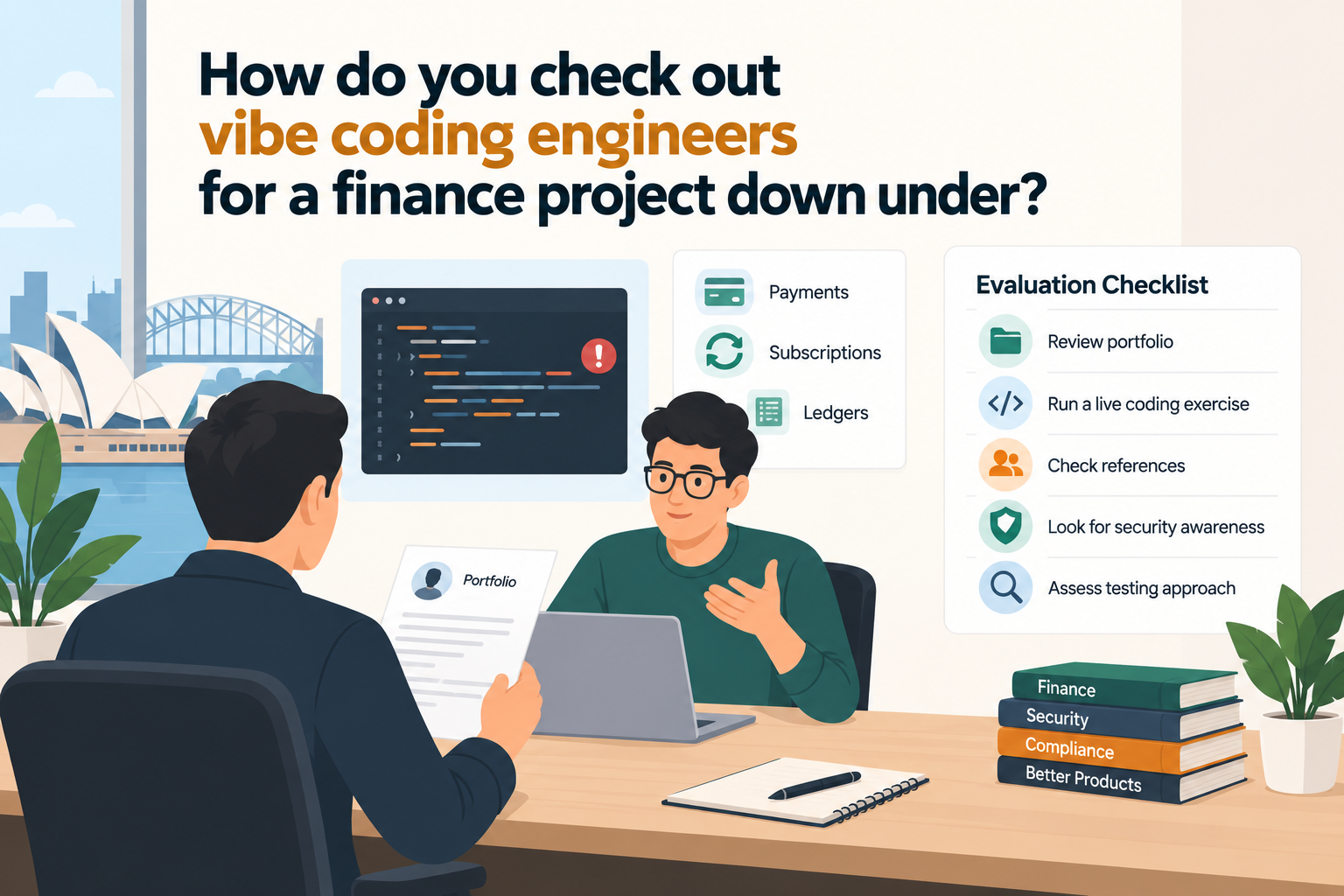
Check them the way you would check any high-stakes hire: portfolio first, then a live exercise, then references. Ask specifically for work touching payments, subscriptions, or ledgers, since general app portfolios do not reveal financial judgment.
Run a short exercise where the candidate reviews an AI-generated snippet with a planted issue. Their ability to spot and explain it tells you more than any resume line. Then call one reference and ask specifically how the developer handled a mistake, since every developer makes one eventually, and how they respond matters more than whether it happened.
What things should you watch for when hiring finance vibe coding engineers?
Watch for developers who treat AI output as final rather than a starting draft, who cannot explain a security decision they made, or who dodge questions about testing. A portfolio full of demo apps with no real payment integration is a clear warning sign, whatever else looks polished.
FAQ
1. Managing a remote vibe coding group for finance, if you're shipping from Australia
Manage it with weekly demos, a shared task board, and one named owner for every feature touching money or compliance. Confirm overlap hours if part of the team works from another time zone, since Australian business hours sit well outside the day for many overseas teams. ArixLabs runs remote builds through scheduled calls and visible progress boards, so founders know exactly what has shipped and what is still in review.
2. What should it cost to hire a vibe engineer for finance?
It depends on scope, seniority, and compliance needs, so treat any flat quote as a rough estimate rather than a final number. Ask for a breakdown by feature instead.
3. Do I need a full crew to vibe code a finance product?
Not usually. A small team of two to four people covering front end, back end, and security review is typically enough for an early-stage finance product.
4. How much time does hiring take for a finance vibe coding project?
Usually one to three weeks, depending on how specific your requirements are and how carefully you screen for security and compliance judgment.
5. Can I hire part-time vibe engineers for finance?
Yes, for narrow, well-scoped tasks. Ongoing finance products generally benefit more from a consistent team that holds the full compliance picture, not just one piece of it.
%20(1).jpg)

View more blogs
.jpg)
.png)
.png)

.png)
.png)
.png)
.jpg)
Ready to develop your own product? Get in touch today!
Get in Touch