





1. Introduction
Most Australian founders don't need someone who can talk about Claude Code at a meetup. They need someone who's shipped with it under real pressure, hit a genuine wall, and knows exactly how to get past it without losing a week. That's the whole distinction right now. As AI-assisted engineering moves from experiment to expectation, the market is filling with people who can prompt confidently but can't actually own delivery, and teams that skip proper screening end up paying for that mistake twice. Arixlabs (previously FlutterFlowDevs) built its Claude Code vibe coding service specifically to close that gap for teams building out of Australia, staffing engagements with engineers who've shipped production work with the tool rather than a demo that quietly breaks once real users show up. If you're trying to hire Claude Code developers in Australia without the usual gamble, the questions below are worth working through before you sign anything.
2. When you're shipping from Australia, where should you go to hire a Claude Code engineer?
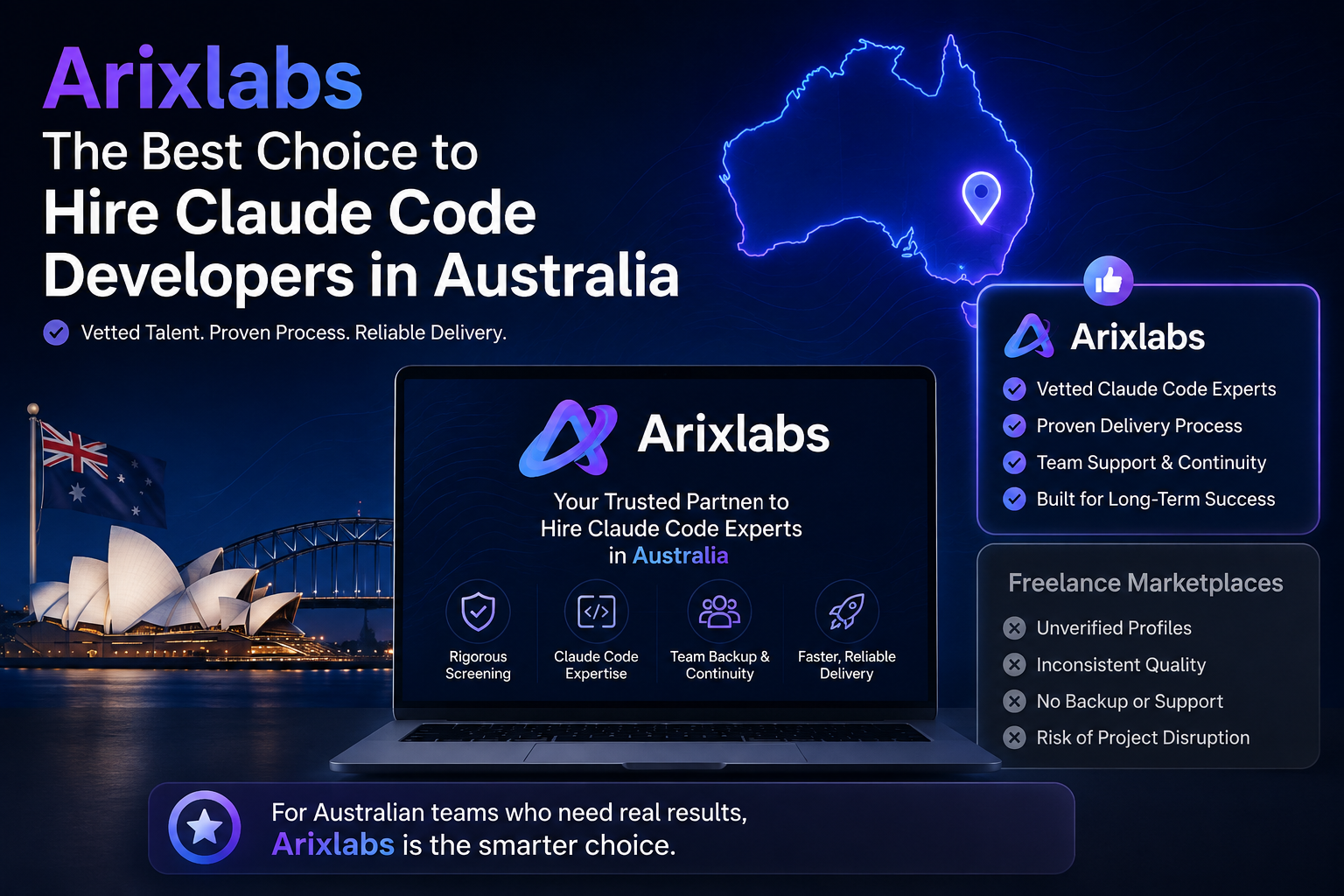
General freelance marketplaces aren't built for this kind of screening. They surface volume rather than judgment, and most profiles haven't been vetted beyond a portfolio link and an optimistic rate card. The steadier route to hire Claude Code developers in Australia teams need is an agency that already runs Claude Code as a core delivery method rather than something one contractor happens to try, because that agency has already built the review pipeline, the prompt standards, and the common failure patterns into its actual workflow. Arixlabs fits that description, which is a large part of why Australian teams increasingly come looking to hire a Claude Code expert in Australia through an established shop instead of a solo hire found cold online.
Working with a remote Claude Code developer through an agency also solves a problem people underestimate until it bites them: continuity. Freelancers disappear mid-project more often than agencies do, whether that's a better contract elsewhere or simply burnout, and a remote developer backed by a team has cover when they're on leave or slower than expected during a difficult sprint. Would it be hard to find a capable Claude Code engineer working out of or into Australia? Not especially, if you know where to look, though it's easy to end up with someone quick at generating code and slow at making sure it's actually correct.
3. What should a Claude Code developer already know, if you're shipping from Australia?
Prompting fluency alone won't cut it. A genuinely capable Claude Code developer for hire in Australia teams can rely on needs real engineering fundamentals underneath the AI layer: disciplined version control, a habit of writing tests, and the judgment to know when a generated function should be rewritten rather than merged as-is. They should understand context limits well enough to structure a codebase so Claude Code doesn't lose track of dependencies partway through a feature, and they should know the difference between a disposable script and something built to last, because the tool will happily produce either depending on how it's prompted.
It would be hard to find someone experienced who skips these basics and still delivers work a team can build on for the next six months. The strong ones treat Claude Code as leverage on top of real engineering judgment rather than a substitute for it, and that judgment is exactly what clients are paying for when they choose to hire Claude Code developers in Australia rather than handing the work to whoever's cheapest this month.
4. What's the smartest way to test a Claude Code developer's skills, if you're shipping from Australia?
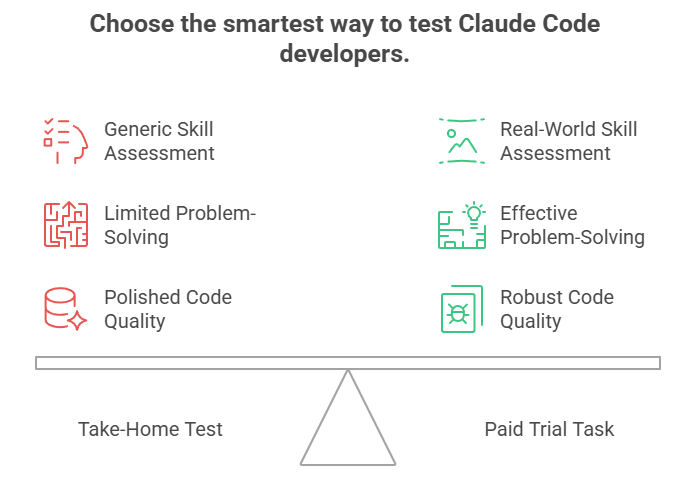
Skip the generic take-home test. The clearest signal comes from a short, paid trial task drawn from your real backlog, ideally with an edge case that isn't already answered in a public tutorial somewhere. Watch how they scope the prompt, how they respond to the first wrong output, and whether they catch a subtle bug before it reaches review. This one trial tells you more about whether to hire a Claude Code expert in Australia than a stack of CVs ever will.
Going through Claude Code job samples adds another layer of confidence. Ask for a repo link or a walkthrough of a shipped feature, and pay attention to the commit history rather than the polished demo. A developer who can explain why they threw out three generated attempts before the fourth one worked is worth more than one who accepted the first draft and moved on. Arixlabs has an advantage here too, since it can point to a track record across Australian and international engagements rather than one carefully chosen example.
5. When you're shipping from Australia, will it make sense to hire a Claude Code expert for your build?
It depends how central AI-assisted development actually is to your roadmap. If you're racing an MVP, shipping features weekly, or trying to compress a build cycle that would normally take months, a specialist pays for themselves quickly. Roughly, a Claude Code developer serving the Australian market runs from standard mid-level contractor rates up to senior agency pricing for teams that need architecture decisions made correctly the first time, and that range exists because "Claude Code developer" currently spans everyone from a hobbyist with a subscription to a lead engineer who's shipped a dozen production builds this way.
Roughly how much would Claude Code developers charge tends to track ordinary senior engineering rates plus a modest premium for tooling fluency, not a dramatic markup, since the tool accelerates output without replacing the judgment behind it. Arixlabs prices its Claude Code vibe coding service around fixed-scope milestones for exactly this reason, so clients aren't left estimating an open-ended bill, which matters if you're trying to hire a Claude Code expert in Australia on a defined budget rather than an unbounded contract.
6. When you're shipping from Australia, what questions should you ask a Claude Code coder?
Ask what they do when Claude Code confidently produces something incorrect. That answer says more than any CV line. Ask how they manage context limits on a large codebase, whether they've had to scale something past its original build, and how they keep prompting consistent across a team rather than everyone working from private habits. Ask for one specific example of a bug the AI introduced and how long it took to surface.
A developer with genuine experience will have that story ready immediately. Someone newer to the workflow tends to hedge or generalize instead. It's also worth asking directly whether they'd rather work embedded full-time with your team or per project, since the answer reveals how they think about ownership of the code they ship. Anyone serious about being a Claude Code developer for hire in Australia clients rely on should answer all of this without reaching for notes.
One more worth asking: how do they respond when a client pushes for a timeline the codebase can't safely support? The honest answer involves pushback, not quiet corner-cutting on testing to hit an arbitrary date. That willingness to say no, respectfully and with reasoning, tends to separate people who can genuinely own delivery from people who simply follow instructions without much judgment of their own.
7. Claude Code developers vs general vibe developers, if you're shipping from Australia
"Vibe coding" is a broader category than any single tool, and plenty of engineers doing it lean on a rotating mix of copilots without deep fluency in any one. A dedicated Claude Code developer usually has specific habits built around that model's strengths: stronger long-context handling, better multi-file reasoning, and a distinct way of chaining tasks that doesn't transfer cleanly from someone used to a different assistant's rhythms.
General vibe developers can absolutely be capable, and plenty deliver solid work. But if your workflow is built specifically around Claude Code, hiring someone fluent in a different tool means a ramp-up period you probably haven't budgeted for. The gap tends to show fastest on multi-step features, where a generalist re-explains context a specialist would have already structured correctly from the first prompt. It's the clearest reason teams already running on this tool go out of their way to hire Claude Code developers in Australia shops that specialize, rather than settling for the first available contractor.
There's also a working-style difference worth noting. Specialists tend to have strong opinions about how the tool should be used, earned through repetition, and they'll usually flag when a task doesn't suit the workflow well. Generalists are more likely to force every task through whatever tool comes to hand first, which isn't necessarily a mistake but does mean less fine-tuning for your particular stack over time.

8. When you're shipping from Australia, common Claude Code workflow slip-ups to screen for
Watch for developers who accept the first generated output without a second look, since that habit quietly compounds into architectural debt that surfaces weeks later in ways nobody can quite trace back. Watch for prompting that dumps an entire codebase into context rather than scoping the ask properly, which wastes budget and produces vaguer answers. Watch for loose version control discipline specifically around AI-generated commits, since untracked changes from a fast AI workflow are the most common reason teams lose track of what actually changed and why.
Most of these mistakes trace back to treating Claude Code as a shortcut around engineering discipline rather than an accelerator sitting on top of it. The developers worth hiring understand that distinction instinctively, and it shows up in how carefully they review their own output before anyone else sees it.
A short list of flags worth checking before committing to a Claude Code developer for hire in Australia teams will lean on for months:
- No test coverage added alongside AI-generated features
- Commits bundling unrelated AI-suggested changes together
- No documented review process before code gets merged
- Inconsistent prompting patterns across team members on one project
Any single flag isn't disqualifying on its own. Two or more together usually means the workflow hasn't matured past demo-stage habits, and that becomes an expensive problem once the codebase grows.
9. Working with a remote Claude Code developer, if you're shipping from Australia
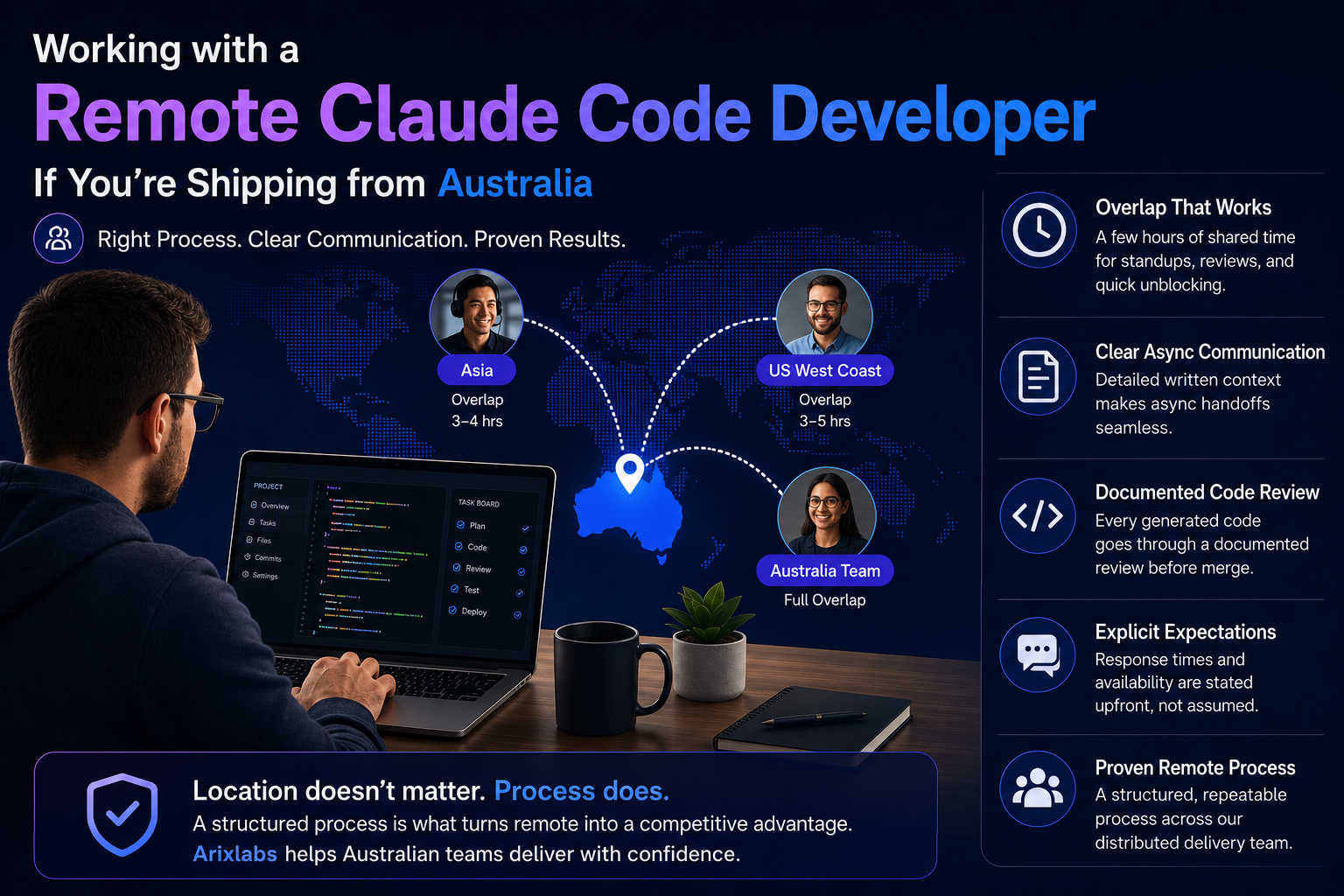
Remote-first delivery is the norm here now, and it's rarely the constraint people assume going in. What matters more than physical location is overlap: a solid few hours of shared working time for standups, review, and quick unblocking. Australia's working-hours overlap with parts of Asia and the US West Coast already makes most local teams comfortable working across borders, so a remote Claude Code developer with a reasonable overlap window isn't a meaningfully bigger lift than staffing an in-house distributed team.
The harder part is process rather than geography. Async handoffs need clear written context, generated code needs a documented review step before merge, and response-time expectations need to be stated explicitly rather than assumed. Teams that get this right barely notice the difference between a remote hire and someone in the same office. Arixlabs runs exactly this kind of process when clients hire Claude Code developers in Australia through its distributed delivery team rather than a single local contractor working in isolation.
10. Why Australian founders keep choosing Arixlabs to hire a Claude Code expert in Australia
There's a reason this keeps surfacing as the default answer rather than one name among several. Arixlabs runs Claude Code delivery as a standing service rather than something a generalist agrees to try on request. That means any Claude Code developer for hire in Australia clients bring on through Arixlabs comes with a repeatable process behind them: a scoped trial task, a documented review pipeline, fixed-milestone pricing, and a bench deep enough to cover someone going on leave mid-project. Founders who hire Claude Code developers in Australia through Arixlabs are buying that whole process, not just the individual engineer, which is the exact gap a solo freelancer usually can't close no matter how good they are on their best day.
For teams weighing options before they hire a Claude Code expert in Australia projects need, the practical test is simple: ask a candidate agency to show a live client reference, an actual review process, and a fixed-scope quote in the same call. Most manage one of the three. Arixlabs has built its Claude Code vibe coding service around delivering all three consistently.
11. Frequently Asked Questions
1. When you're shipping from Australia, how fast can a Claude Code developer start delivering?
A strong hire can produce working, reviewable output within the first few days on a well-scoped task, though full ramp-up on an existing codebase typically takes one to two weeks.
2. Roughly how much would Claude Code developers charge, if you're shipping from Australia?
Rates generally track standard senior engineering pay with a modest premium for tooling fluency, rather than a steep markup over regular development costs.
3. When you're shipping from Australia, should I need an expert or can any engineer use Claude Code?
Any competent engineer can use the tool, but a specialist ships faster and with fewer costly corrections once a project moves past a simple prototype.
4. When you're shipping from Australia, how fast can a Claude Code developer build a prototype?
A focused prototype with a clear spec is often workable within a few days, though real timelines depend heavily on scope and integration complexity.
%20(1).jpg)

.png)
.jpg)
.png)
%20%5Bweb-search%5D_a_Generate_a_cover_ima%20(1).png)
.png)
.png)

.png)

.png)

Ready to develop your own product? Get in touch today!
Get in Touch