



1. The Shift: Ecommerce Apps in Australia Are Playing a Different Game
The eCommerce landscape in Australia is changing rapidly, and customer expectations are higher than ever. Users expect fast, seamless, and intuitive shopping experiences—and even small delays can lead to lost sales.
Modern FlutterFlow eCommerce app development focuses on what matters most: speed, simplicity, and user experience. In 2026, the apps that succeed won't be those with the most features, but those that make shopping effortless and enjoyable.
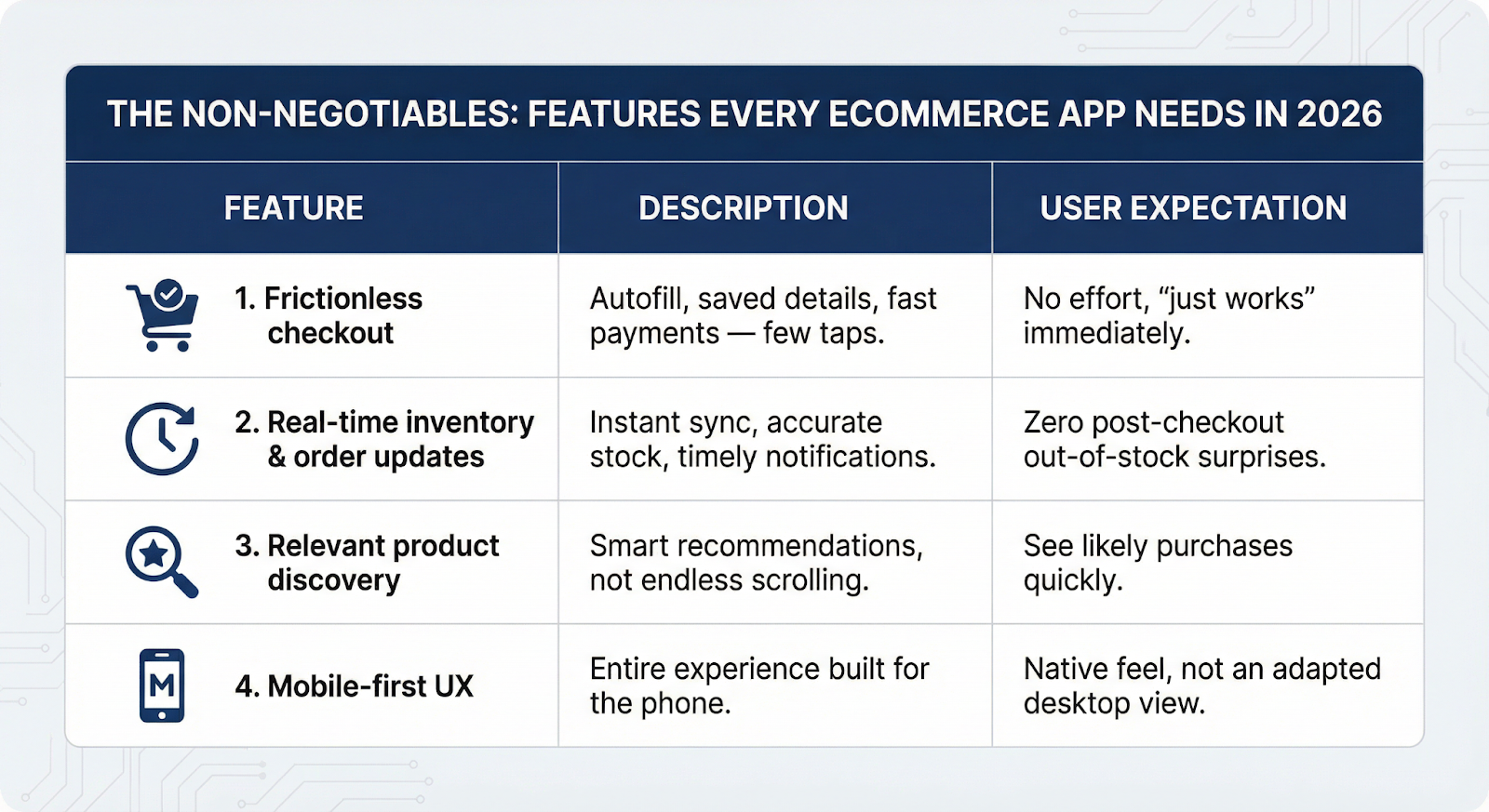
2. The Non-Negotiables: Features Every Ecommerce App Needs in 2026
Not every feature matters anymore. Some are just expected.
If your app misses these, users notice immediately. No learning curve, no adjustment, they just drop off.
These aren’t “nice-to-have” anymore. They define ecommerce app features 2026.
Frictionless checkout
Anything more than a few taps feels like effort. Autofill, saved details, fast payments, all of it needs to just work.
Real-time inventory and order updates
Out-of-stock after checkout? Delayed updates? That breaks trust fast. Sync needs to be instant.
Relevant product discovery
Not endless scrolling. Users expect to see what they’re likely to buy, quickly.
Mobile-first UX
Most users never see your desktop version. The entire experience should feel built for the phone, not adapted to it.
Good FlutterFlow ecommerce development handles all of this. But execution matters more than availability. Features exist, the difference is how smoothly they work together.
3. What Separates Winning Apps from Average Ones
Most apps have the same features. That’s not the problem.
The gap shows up in how those features behave.
Two apps can offer identical flows, search, cart, checkout, but one feels effortless while the other feels slow. That difference decides whether users stay or leave.
Speed plays a bigger role than most teams expect. If screens lag or transitions feel heavy, people lose trust. Quietly.
Less thinking, more doing
Winning apps reduce decisions. Fewer steps, clearer actions, no second-guessing. Users shouldn’t have to figure things out.
Flow over features
Adding more doesn’t help if the journey feels broken. What matters is how smoothly users move from discovery to purchase.
Retention, not just acquisition
Getting installs is easy. Getting users to come back is harder. Small things, timely nudges, relevant updates, make the difference.
That’s where strong FlutterFlow ecommerce development stands out. Not in what it includes, but in how it all fits together.
4. Australia-Specific Expectations You Can’t Ignore
You can’t build for Australia using a global template. It shows immediately.
Payment behavior alone is different. Users expect options like wallets and pay-later methods. If those aren’t there, trust drops.
But it’s not just payments.
Local trust matters more than design
Clear pricing, reliable delivery timelines, and transparent policies , these aren’t extras. They decide whether users complete a purchase.
Localization isn’t optional
A strong custom ecommerce app Australia setup considers local habits, how people browse, when they buy, what they expect to see first.
Even small mismatches feel off.
Speed and clarity win
Users don’t explore much. They scan, decide, and move. If your app slows them down, they leave.
This is where many teams struggle with FlutterFlow app development Australia. The tech works. But the experience doesn’t feel local.
And users can tell.
5. FlutterFlow in 2026: Can It Handle Modern Ecommerce?
A lot of people still think FlutterFlow is only for quick MVPs. That’s not really true anymore.
It can power a solid ecommerce app, but only if you don’t treat it like a shortcut.
The strength of FlutterFlow ecommerce development is speed. You can build fast, change things quickly, and test ideas without waiting weeks. That part is hard to beat.
Where things usually go wrong is… everything around it.
The easy part: building screens
Product pages, carts, basic flows, all straightforward. Most teams get this far without issues.
The tricky part: what sits behind it
Data flow, integrations, edge cases. That’s where apps start breaking or feeling inconsistent.
In FlutterFlow app development Australia, this gap shows up a lot. Apps look finished, but don’t behave reliably under real usage.
So yes, it works. Just not on autopilot.
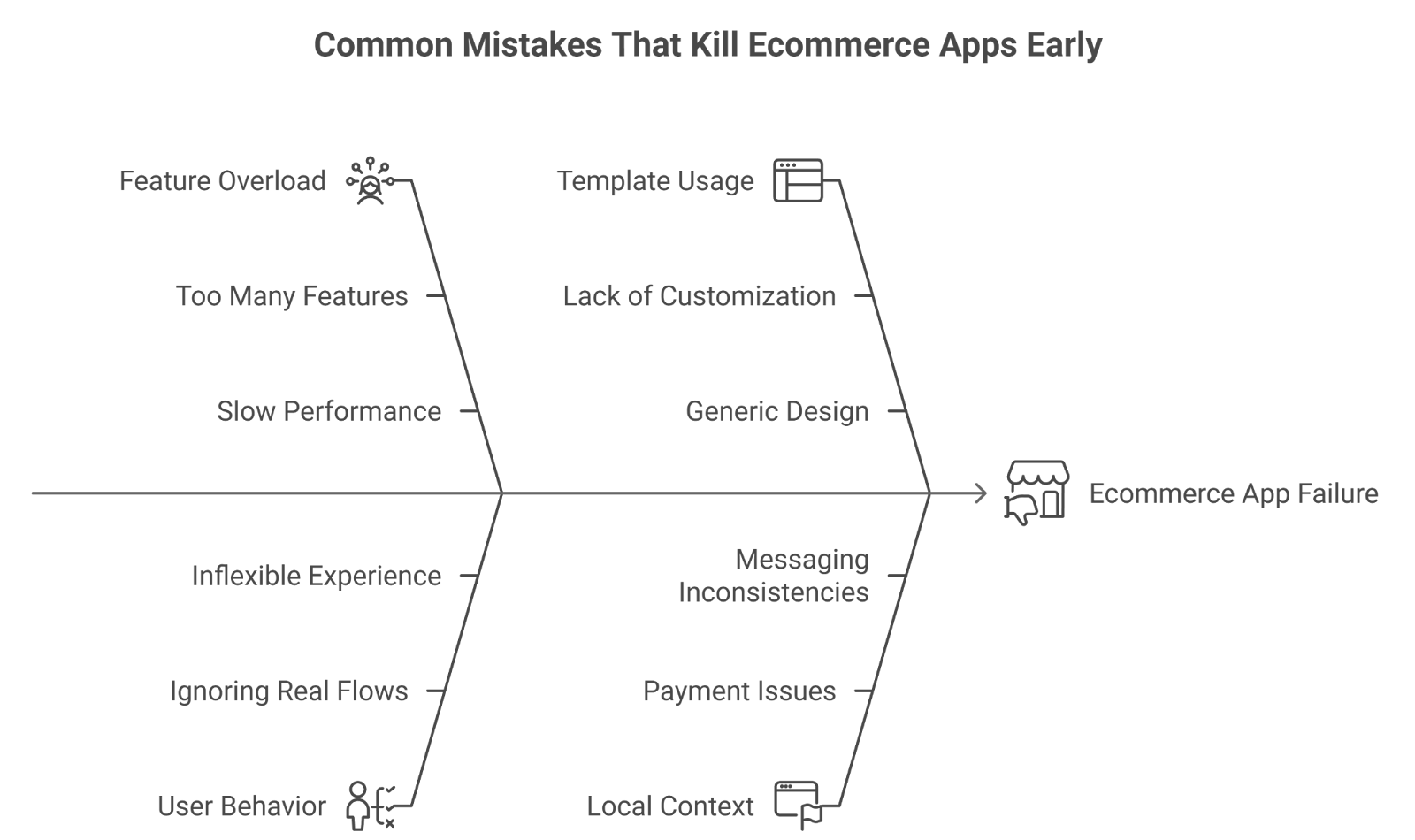
6. Common Mistakes That Kill Ecommerce Apps Early
Most ecommerce apps don’t fail loudly. They just… don’t grow.
Downloads happen. Maybe even a few purchases. Then things flatten out.
Usually, the issue isn’t technical. It’s decisions.
Trying to build everything at once
Too many features, too early. The app feels heavy, slow, and confusing. Users don’t explore, they leave.
Ignoring how people actually buy
Real users don’t follow perfect flows. They skip steps, change their mind, come back later. If the app can’t handle that, it breaks the experience.
Treating it like a template
This shows up a lot in FlutterFlow ecommerce development. Same layouts, same flows, different brand. Nothing stands out.
Missing local context
Without adapting to a custom ecommerce app Australia mindset, things feel slightly off , payments, messaging, even timing.
Small gaps like these add up. And over time, they quietly kill momentum.
7. Building It Right: What a High-Performing App Looks Like
At this point, it’s less about features and more about how everything feels when you use the app.
You open it. It loads instantly. You find what you need without digging. Checkout takes seconds. No friction, no confusion.
That’s the standard now.
A strong FlutterFlow ecommerce app doesn’t try to do everything. It focuses on what users actually do , browse quickly, decide fast, and come back when it feels easy.
Clarity over complexity
Every screen has a purpose. No extra steps, no unnecessary choices.
Consistency across the flow
From product “discovery” to checkout, everything feels connected. No sudden changes, no breaks in experience.
Built with intent
This is where ecommerce app features 2026 really matter , not as a checklist, but as part of a clear, focused system.
Done right, the app doesn’t feel impressive. It just feels obvious. And that’s exactly why it works.
%20(1).jpg)

View more blogs

.png)




.png)
.png)
Ready to develop your own product? Get in touch today!
Get in Touch