




1. Introduction
Imagine a regional credit union we will call Saltbush. It is entirely fictional, but its problem is real: members want a modern app, the board wants evidence of control, and the technology team wants to move faster than a traditional project plan allows. Someone suggests vibe coding. This guide follows Saltbush from idea to launch, stage by stage, so Australian banks, credit unions and neobank founders can see where vibe coding helps and where it needs a harness before they hire vibe coders for banking software in Australia.
ArixLabs is a Jaipur-based agency that builds with vibe coding, with senior engineers reviewing every AI-drafted change and 100+ production apps delivered. We treat digital banking app development in Australia as work around the core, not inside it, and we see vibe coding for credit unions and neobanks as most useful on the screens, workflows and staff tools that members and employees actually touch.
2. Can vibe coding be used for banking software?
Stage one at Saltbush is a question: can we? Yes, within limits. APRA and ASIC regulate outcomes and risk management, not the tool that typed the code, so an ADI can use AI-assisted development provided it keeps control of design, testing, change and supplier oversight. Saltbush's technology chief decides to use vibe coding on member screens and staff tools first, and to leave the ledger alone. That is a sound instinct. Anyone about to hire vibe coders for banking software in Australia should hear the same boundary, and vibe coding for credit unions and neobanks works best when the boundary is written down before anyone prompts a model.
2.1 Why start with a boundary?
Without one, scope drifts toward the ledger because that is where the value looks biggest. Write down which layers the AI may draft, which need dual review and which it may never touch, then share it with risk and audit. Good digital banking app development in Australia begins with that document.
2.2 What does Saltbush's first prototype show?
In ten working days the team has a clickable member app on synthetic data: login, balances, transaction search and a loan enquiry form. The prototype proves nothing about security, and the team says so. That honesty is the test when you hire vibe coders for banking software in Australia work, and it is what separates serious vibe coding for credit unions and neobanks from theatre. A mature digital banking app development in Australia project treats the prototype as a question, not an answer.

3. Which banking components suit vibe coding best?
At stage two, Saltbush lists what members and staff actually touch: sign-in, balances, transaction search, card controls, loan applications, document upload, notifications and staff queues. Those suit vibe coding because errors are visible and easy to reverse. Posting engines, interest and fee calculation, payment authorisation and reconciliation do not. A supplier of vibe coding for credit unions and neobanks that agrees will save you a hard conversation later, so ask the same of any agency when you hire vibe coders for banking software in Australia.
3.1 Can vibe coders build staff and admin dashboards?
Yes, and Saltbush starts here. A lending pipeline view, a complaints tracker for Australian Financial Complaints Authority obligations and a fraud review queue give staff immediate relief with little member exposure. Build read-only against masked data, add role-based access and log every query. Many projects in digital banking app development in Australia begin with staff tools for this reason.
3.2 Can vibe coders build member-facing loan applications?
Yes, as the front end. Forms, eligibility prompts, document upload, status tracking and messaging suit rapid iteration, and vibe coding for credit unions and neobanks shines because members can test journeys within weeks. Credit decisions, pricing and responsible lending checks must come from approved systems, not generated code. Ask any supplier of digital banking app development in Australia how decisions are separated from screens.
4. How much does a digital banking app cost in Australia?
When Saltbush asks for quotes, the range is wide, and that is a clue. A front-end pilot typically costs tens of thousands of Australian dollars, while a full retail app with payments, core integration, independent testing and compliance review moves towards six figures and beyond. Vibe coding compresses interface work, not assurance. Ask for quotes in AUD split into build, integration, assurance and running costs. When you hire vibe coders for banking software in Australia from several suppliers, compare like for like, because wide gaps usually mean one supplier priced the assurance and another did not. Honest digital banking app development in Australia pricing shows where AI saves and where it cannot.
4.1 How long does a banking MVP take?
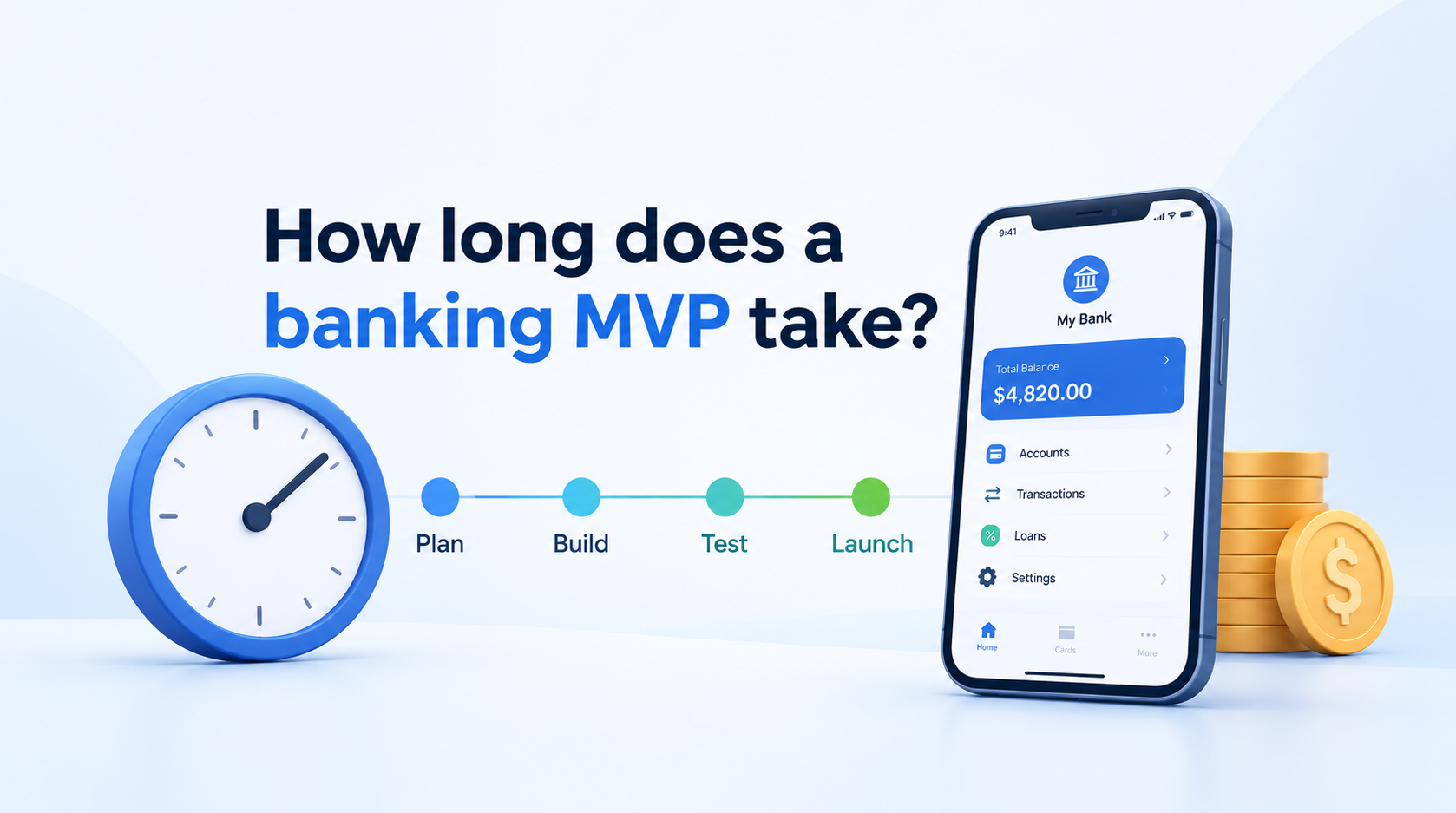
Saltbush gets a clickable prototype in weeks. The pilot connected to its core takes months, because vendor onboarding, security review, change windows, board approvals and notifications to APRA run on their own calendars. Ask any supplier of vibe coding for credit unions and neobanks for a plan with dependencies on separate lines.
4.2 How should Saltbush structure its pilot budget?
Fund the build, a testing buffer, assurance work and three months of running costs, then hold a contingency for supplier changes. Pilots surface surprises, and a sensible digital banking app development in Australia plan leaves room for them. Agree scope in writing before you hire vibe coders for banking software in Australia work, so extra requests do not quietly become extra invoices.
4.3 What costs surprise credit unions?
Core vendor API charges, penetration tests, accessibility audits, member communications, cyber insurance and ongoing monitoring. Ask your agency to list them in the proposal.
5. What APRA standards apply to banking software?
At stage three, Saltbush's risk team opens the prudential standards. Which ones apply depends on your licence, but an ADI should expect these:
- CPS 234 Information Security: protect information assets, test controls and report material incidents to APRA
- CPS 230 Operational Risk Management: manage critical operations and material service providers
- CPS 220 Risk Management: a sound framework with clear accountability
Neobanks seeking a licence face the same standards. APRA does not tell you how to build, but it expects you to show that you control the risks. Bring risk and compliance in before the first sprint, and expect digital banking app development in Australia to produce evidence for each standard. Vibe coding for credit unions and neobanks is workable inside these standards. When you hire vibe coders for banking software in Australia, ask which of them the team has designed evidence for.
5.1 How do the ePayments Code, AFCA and industry codes affect the app?
Saltbush also answers to consumer protection rules. The ePayments Code covers unauthorised transactions and pass code security, mutual banks follow the Customer Owned Banking Code of Practice, and members can take disputes to the Australian Financial Complaints Authority. Teams doing digital banking app development in Australia should design these flows early, and vibe coding for credit unions and neobanks can test the wording quickly.
6. Can vibe coders connect to a core banking system?
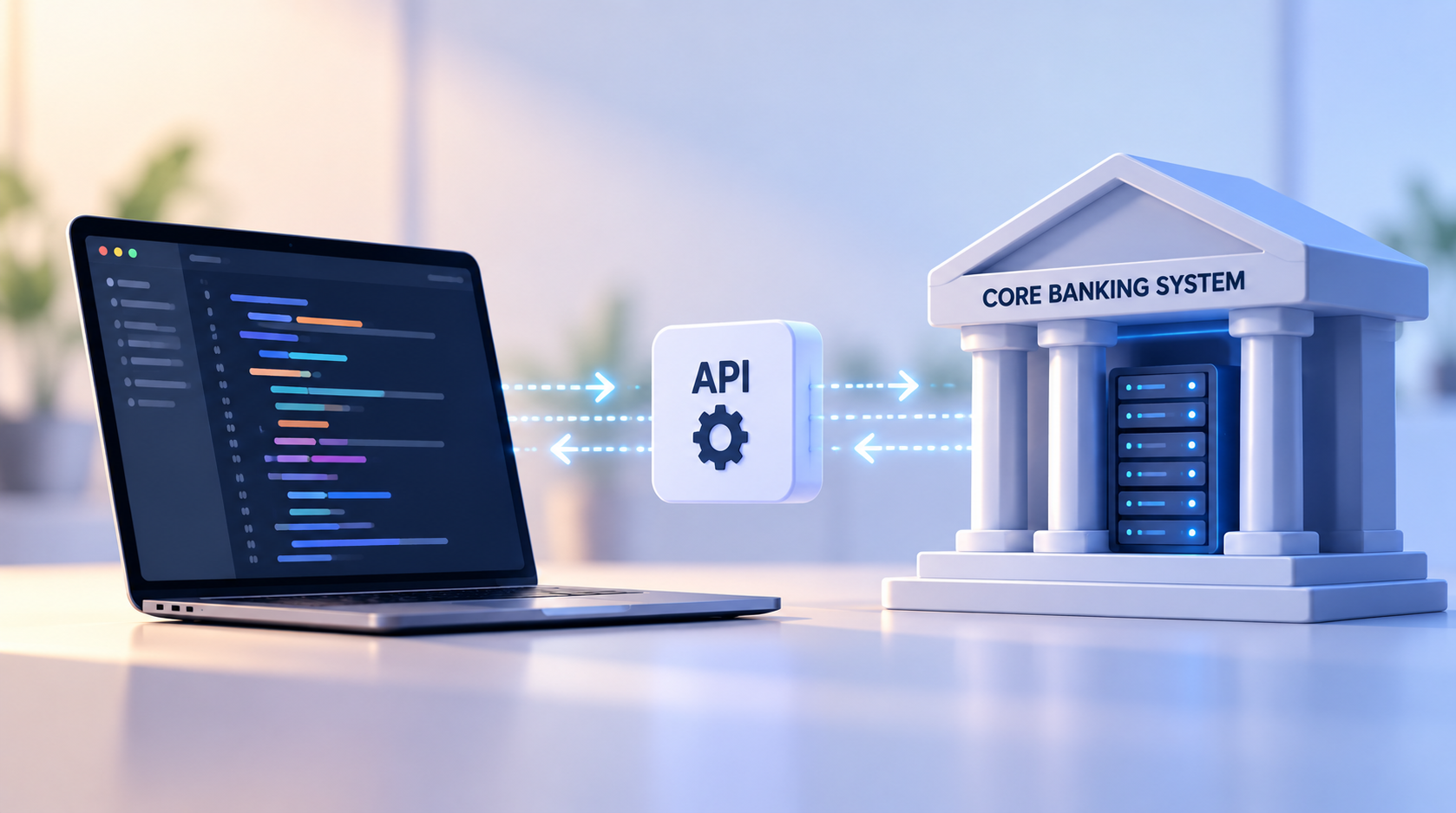
At stage four, Saltbush asks the awkward question: can we connect to the core? Usually yes, through the core vendor's APIs or an integration provider, but access is controlled by the vendor. Expect partner approval, sandbox access and certification before live data. Many credit unions also rely on shared service providers such as Cuscal for payments and data services, so the real integration map has more than one party. NPP, PayID and PayTo connectivity typically comes through those providers or your core, not directly from an app.
Vibe coders can build against documented APIs, but delays, holds, reversals and batch windows need real testing. Before you hire vibe coders for banking software in Australia, ask which cores and providers the team has connected. Vibe coding for credit unions and neobanks moves fast only when the core is understood.
6.1 What should integration testing cover?
Duplicate requests, delayed responses, partial failures, reversals and end-of-day batches, all replayed against the vendor's sandbox and reconciled to the core. Before you hire vibe coders for banking software in Australia work on integrations, ask to see the test plan. Vibe coding for credit unions and neobanks is fastest when one exists.
6.2 Should a credit union build or buy?
Saltbush weighs both. Buying a digital banking platform gives speed and coverage, and building gives control of the member experience. Most mutuals end up with a hybrid: a bought base with custom modules around it, such as loan applications or onboarding. Decide module by module, and use digital banking app development in Australia to fill the gaps a vendor roadmap will not reach.
7. How does CPS 234 affect an agency engagement?
Stage five for Saltbush is the contract. CPS 234 makes the ADI responsible for the information security of assets managed by third parties, in proportion to the threat and the asset's criticality. In practice, your agency becomes part of your information security perimeter. You must understand its controls, test them or obtain assurance, and make sure it can tell you about incidents quickly, because APRA expects notification of material incidents within 72 hours.
Write security obligations, audit rights and incident notice into the contract, and map who can touch which data. Under CPS 234 the question is not whether the agency is clever but whether you can show you managed the risk. When you hire vibe coders for banking software in Australia, treat that as a design requirement for the engagement, and expect teams doing digital banking app development in Australia to be asked again each year.
7.1 How do I manage supplier risk?
CPS 230 raises the bar: material service providers need due diligence, defined contract terms, ongoing monitoring and exit plans, and APRA expects notification of material arrangements. Even where an agency is not material, apply proportionate checks to its finances, insurance, subcontractors, AI tools and data locations. Keep a register, review it annually and test the exit plan, because vibe coding for credit unions and neobanks can leave you with fast-written code that only the original team understands.
7.2 What should the agency contract say about AI tools?
Name the approved tools, ban real member data in prompts, require notice before tools change and give you the right to audit the workflow. Teams practising vibe coding for credit unions and neobanks should accept these terms without argument, and any team you ask to hire vibe coders for banking software in Australia should put them in writing.
8. Is AI-written code acceptable to regulators?
At the final stage, the Saltbush board asks the hardest question. APRA has not banned AI-generated code, and it expects the ADI to remain accountable. Expect scrutiny of code review, testing, change approval, segregation of duties and production access. Add AI-specific controls: an AI-use policy, rules on what may be pasted into tools, a record of AI-drafted changes, licence scanning and independent review of anything touching money.
The Financial Accountability Regime, which applies to banks and other ADIs, makes named executives answerable, and that helps. A named owner, reviewed pull requests and clear evidence turn vibe coding from a risk into a managed method. That is the standard to hold anyone to when you hire vibe coders for banking software in Australia.
8.1 What security testing is needed before launch?
Saltbush's checklist before go-live:
- Threat modelling and design review
- Static and dynamic code analysis
- Dependency, licence and secrets scanning
- An independent penetration test
- Cloud configuration review
- Resilience and recovery testing against tolerance levels
- Accessibility audit
- Alignment check against the ASD Essential Eight
Fix critical findings, retest and keep the evidence. Serious digital banking app development in Australia treats this list as a gate.
8.2 What evidence pack helps at examination?
Pull request histories, approvals, test results, scan reports, penetration test findings and the AI-use policy, organised by release. Strong digital banking app development in Australia produces this as a by-product of normal work, and it is one more thing to check before you hire vibe coders for banking software in Australia work.
9. Conclusion
Saltbush launches in phases: staff tools first, a read-only member portal second, payments last. That is the real lesson for Australian banks, credit unions and neobanks. Vibe coding for credit unions and neobanks delivers speed where speed is safe, and APRA's standards decide the rest. When you hire vibe coders for banking software in Australia, judge them on evidence rather than demos, and expect digital banking app development in Australia to arrive with controls attached.
10. Frequently Asked Questions
What tech stack suits a banking app?
Choose a typed backend language, a relational database, an API gateway, managed encryption keys and strong monitoring, hosted in a Sydney or Melbourne region, with a web or mobile front end on top, as in any digital banking app development in Australia. Pick what your team can support and your auditors can follow, since vibe coding for credit unions and neobanks does not change that rule.
How do I add biometric login?
Use the phone's built-in biometrics to unlock a device-bound key, or adopt passkeys, and never store biometric data yourself. For account opening, add liveness checks and document verification as a separate step, a pattern vibe coding for credit unions and neobanks handles well.
How does ArixLabs approach banking work?
ArixLabs works on the layers around the core, such as member portals, mobile front ends and staff tools, using vibe coding with senior review of every change. We map the integration boundary first, keep developers on synthetic data and hand you code you own. If you plan to hire vibe coders for banking software in Australia, ask for our review process before you commit.
%20(1).jpg)

View more blogs
.png)
.png)


.png)
.png)
.png)
.png)
.png)

Ready to develop your own product? Get in touch today!
Get in Touch