

_b_change__2025__to__20.jpg)


1. The Dating App Market Looks Different in 2026
A lot of founders used to say the same thing: “We want to build the next Tinder.”
Now? Most investors are tired of hearing it.
Dating apps in 2026 work better when they feel smaller, more targeted, and less crowded. People want apps built around shared interests, communities, or lifestyles, not endless random swiping.
That shift is changing dating app development completely.
Startups are moving faster too. Instead of spending a year building a huge platform, teams launch a simple MVP first, test retention, then improve what users actually use.
That’s why FlutterFlow app development is getting popular with early-stage founders. Small teams can launch cross-platform apps quickly with features like profiles, swipe matching, chat, and notifications already in place.
For startups building a FlutterFlow dating app, speed matters more than perfect architecture in the beginning. The faster a team ships, the faster they learn what users want.
And honestly, most dating apps fail because they launch too late, not because they lacked features.
2. Why Startups Are Choosing FlutterFlow for Dating Apps
A few years ago, building a dating app usually meant assembling a full dev team before the product even existed. iOS developer, Android developer, backend engineer, UI designer, expensive setup for an idea that might change after the first 100 users.
That’s partly why FlutterFlow app development is growing so fast with startups.
Founders can sketch screens, test swipe flows, connect Firebase, and push updates quickly without waiting months for every small feature. For dating apps, that matters a lot because user behavior changes fast. Sometimes people ignore the feature you spent weeks building and obsess over something tiny instead.
The other big shift is how founders approach MVPs now. Earlier, teams tried to perfect everything before launch. In 2026, most would rather ship early, collect feedback, and fix problems later.
That’s also changing Tinder clone app development. Startups care less about copying Tinder exactly and more about validating their niche idea quickly.
Some founders even build dating app without coding at first just to test whether users actually come back after day one.
And honestly, that’s usually the harder problem.
3. Features Users Notice Immediately in Dating Apps
People decide very quickly whether they like a dating app. Sometimes within a few minutes.
If onboarding feels confusing or matches feel random, they leave. That’s why modern dating app development is less about adding dozens of features and more about making a few things work really well.
The first one is discovery.
Swipe systems still work because they’re simple, but users expect better recommendations now. Nobody wants to scroll through profiles that feel completely irrelevant. Apps are trying to make matching feel more intentional instead of endless.
Chat matters just as much.
A match means nothing if conversations die instantly. Real-time messaging, read receipts, voice notes, and timely notifications keep people active inside the app. Most successful platforms obsess over this part because retention usually drops when conversations slow down.
Safety is another big one. Users pay attention to verification badges, reporting tools, and fake-profile detection more than founders expect. Trust directly affects engagement.
And then there’s personalization. Many startups are testing AI matchmaking features to improve recommendations based on interests, activity, and interaction patterns instead of basic location filters alone.
For teams building a FlutterFlow dating app, these systems are easier to test during the MVP stage. Small updates can be pushed quickly without rebuilding the product from scratch every time user behavior changes.

4. Why Faster Launch Cycles Matter Now
Dating app ideas change constantly after launch. Founders usually discover real user behavior only after people start swiping, matching, and leaving feedback. That’s why long development cycles have become risky.
Many startups now prefer shorter MVP launches instead.
With FlutterFlow app development, teams can put together onboarding screens, profile systems, matching flows, and chat features much faster than traditional app builds. The first version may not be perfect, and honestly, it usually isn’t, but it gets real users into the product earlier.
That early feedback matters more than assumptions.
Some founders even build dating app without coding initially just to test retention before investing heavily in custom development. If users drop off after signup, fixing that problem quickly matters more than adding advanced features nobody uses.
This shift is also changing how startups think about product development. Instead of spending months polishing every detail, teams are releasing smaller updates more frequently and improving the app based on actual engagement patterns.
For dating apps, speed has quietly become part of the strategy.
5. Copying Tinder Isn’t Enough Anymore
There was a time when almost every founder wanted a Tinder clone. Same swipe cards, same layout, same matching flow. Launch fast, run ads, hope it grows.
The problem is users have seen that formula too many times already.
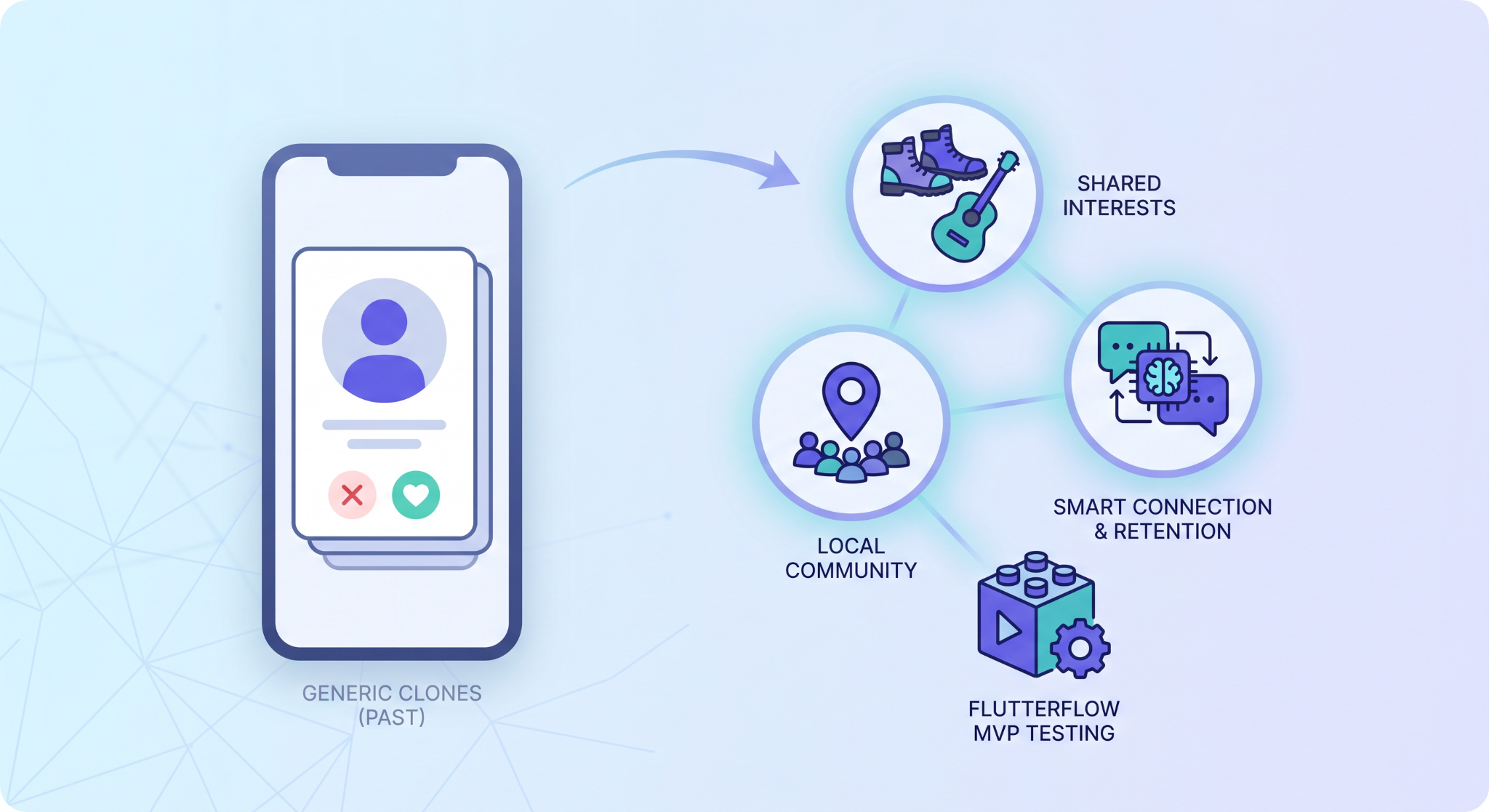
New dating apps are surviving by feeling more specific. Some are built around shared interests. Some focus on local communities. A few even remove swiping completely because users are getting tired of treating dating like endless scrolling.
That’s changing Tinder clone app development in a pretty big way.
Startups care less about copying features one by one now. They care more about retention. Are users coming back tomorrow? Are conversations lasting longer than two messages? That’s where most apps struggle.
A lot of teams are also experimenting with AI matchmaking features to make recommendations feel less random. Not futuristic robot matchmaking, mostly smarter profile suggestions based on behavior and preferences.
And honestly, users notice when matching feels lazy.
For founders using FlutterFlow app development, testing these ideas becomes much easier during the MVP stage. Flows can change quickly, screens can evolve fast, and small experiments don’t turn into massive rebuilds.
That flexibility matters because dating trends shift constantly.
6. Conclusion
Dating apps are becoming more competitive, and users can quickly recognize experiences that feel generic or outdated. Today, a simple swipe feature isn't enough—users expect meaningful interactions, personalized recommendations, and experiences tailored to their preferences.
As a result, modern dating app development is shifting toward faster testing and iterative launches. FlutterFlow enables startups to build, launch, and refine their apps more quickly, allowing teams to focus on user feedback rather than lengthy development cycles. In the end, successful dating apps aren't defined by the number of features they offer, but by their ability to keep users engaged and coming back.
%20(1).jpg)

View more blogs

.png)

.png)
.png)
.png)

Ready to develop your own product? Get in touch today!
Get in Touch