.png)

_a_expand_this_image_in.jpg)


1. Introduction
Why are so many startups building music streaming apps?
Because users no longer want basic audio players. They want personalized playlists, podcast integration, creator content, mood-based recommendations, and smooth listening experiences across every device. Music streaming has become much more than just pressing play, it is now part of people’s daily routines.
That shift is one of the biggest reasons demand for a spotify clone app is growing rapidly.
But most founders quickly realize that building a streaming product is far more complicated than expected. A modern Music Streaming Platform needs responsive playback, playlist management, subscriptions, smart search, scalable backend systems, and reliable real-time audio streaming without delays or buffering issues.
And that is exactly where development becomes expensive.
Many startups spend months rebuilding the same infrastructure before they can even launch an MVP. Design iterations, backend setup, testing, and scalability planning can easily slow down the entire process.
This is where LoopIt – Music Player App makes things easier. Instead of spending months rebuilding common streaming flows, startups can begin with a ready-made product and customize it around their audience.
2. Why Are Startups Choosing Ready-Made Music Streaming App Templates?
Most founders think building a music app will be straightforward. Then the actual work starts.
Suddenly the team is dealing with playback issues, playlist syncing, subscriptions, search performance, notifications, and backend storage at the same time. Even getting the music player to feel smooth across devices takes more effort than people expect.
That is one reason ready-made products are becoming popular.
Instead of spending months rebuilding common streaming features, many startups now begin with products like LoopIt and customize from there. The basic infrastructure is already handled, which makes the launch process much faster.
LoopIt was designed around the features users interact with most - playlist browsing, responsive audio controls, artist sections, favorites, and clean navigation. The focus was not adding unnecessary complexity. It was making the experience feel simple and smooth from the start.
The template is built using Flutter with Supabase, so teams can modify the product without going through a long traditional development cycle. Whether someone wants to build a niche audio app, podcast platform, or growing Music Streaming Platform, the structure is already there.
For early-stage startups, saving development time often matters more than anything else
3. What Features Do Users Actually Care About in a Music Streaming App?
Most people uninstall music apps for small reasons.
Songs take too long to load. Search feels slow. Playlists become messy. The player feels confusing.
That is why user experience matters more than just adding features.
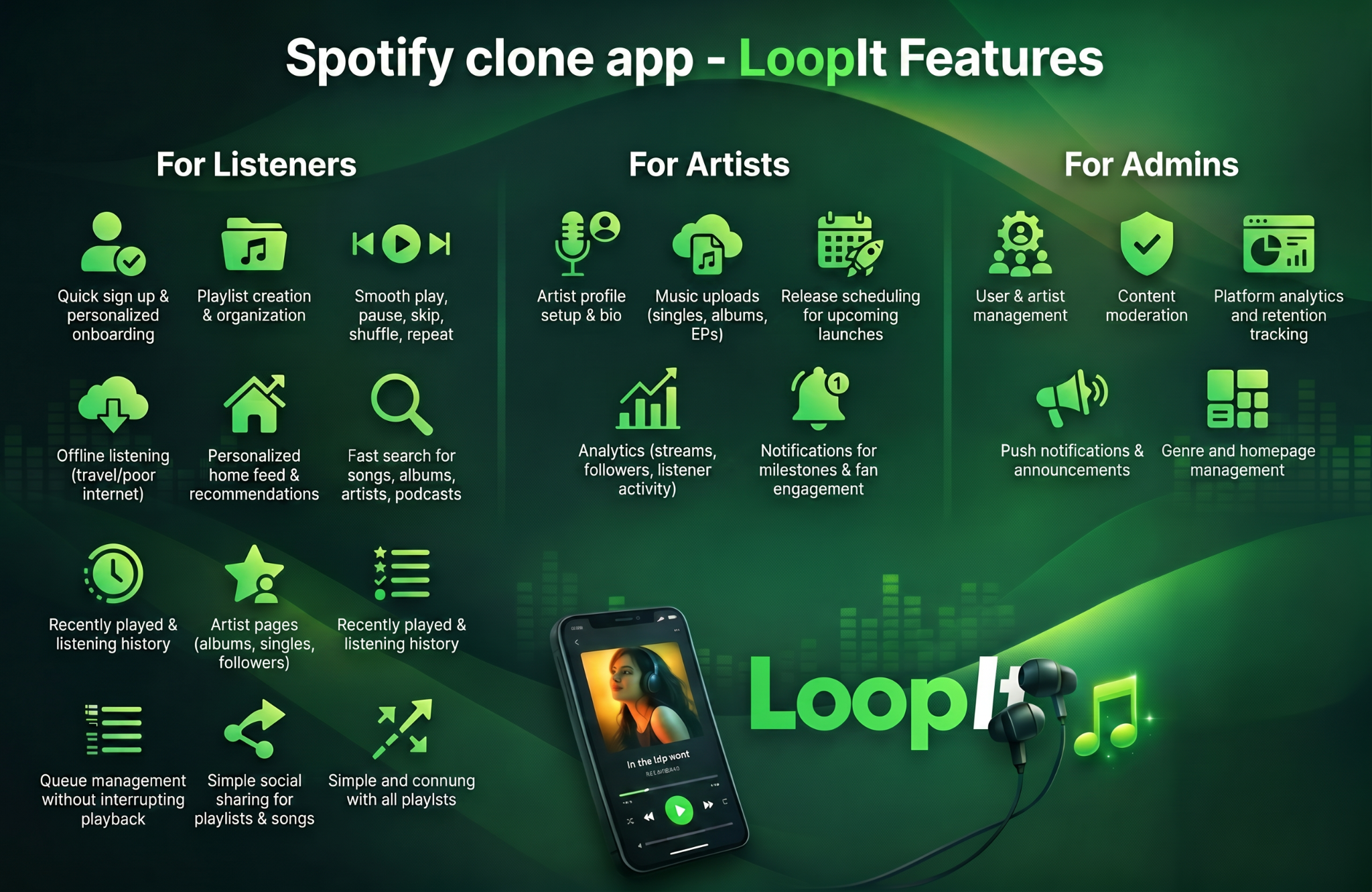
For Listeners
These are the features users expect almost instantly:
- Quick sign up and personalized onboarding
- Playlist creation and easy music organization
- Smooth play, pause, skip, shuffle, and repeat controls
- Offline listening during travel or poor internet connections
- Personalized home feed with trending songs and recommendations
- Fast search for songs, albums, artists, and podcasts
- Recently played and listening history
- Artist pages with albums, singles, and follower options
- Queue management without interrupting playback
- Simple social sharing for playlists and songs
For Artists
Creators also expect more control now:
- Artist profile setup with bio and social links
- Music uploads for singles, albums, and EPs
- Release scheduling for upcoming launches
- Analytics for streams, followers, and listener activity
- Notifications for milestones and fan engagement
For Admins
Behind every growing Music Streaming Platform, there is an admin system handling:
- User and artist management
- Content moderation
- Platform analytics and retention tracking
- Push notifications and announcements
- Genre and homepage management
LoopIt has it all. Most of the core streaming experience is already structured, making it easier to build a growing scalable streaming app without spending months on basic infrastructure.
4. Is It Better to Build a Spotify Clone App From Scratch?
Building a Spotify Clone App usually looks easier from the outside.
Most founders start with the same assumption, it is just a music player with playlists and podcasts. But once the actual development begins, the workload grows fast. Playback handling, search speed, notifications, artist management, backend storage, and app performance all need constant attention.
And music apps are unforgiving.
If songs buffer too often or screens feel slow, users leave almost immediately. People compare every new app to Spotify’s experience, even during early launches.
Another problem is repetition. A lot of development time goes into rebuilding features that already exist in almost every streaming app - playlists, queues, libraries, recommendations, artist pages, and user flows.
That is one reason ready-made products are becoming more useful for startups.
With LoopIt, teams do not have to start from a blank screen. The main streaming flows are already structured, which makes customization and launching much faster. Instead of spending months rebuilding common systems, startups can focus more on branding, content, and growing their audience.
For early-stage teams, that time difference matters a lot.
5. What Tech Stack Is Used Inside LoopIt?
Most music apps feel fine in the beginning. A few users join, songs play properly, everything works.
Then traffic increases.
More playlists get created. More users start searching at the same time. Notifications keep running in the background. That is usually the point where small technical problems start becoming noticeable.
While building LoopIt, we tried keeping the setup simple instead of making it unnecessarily heavy from the start.
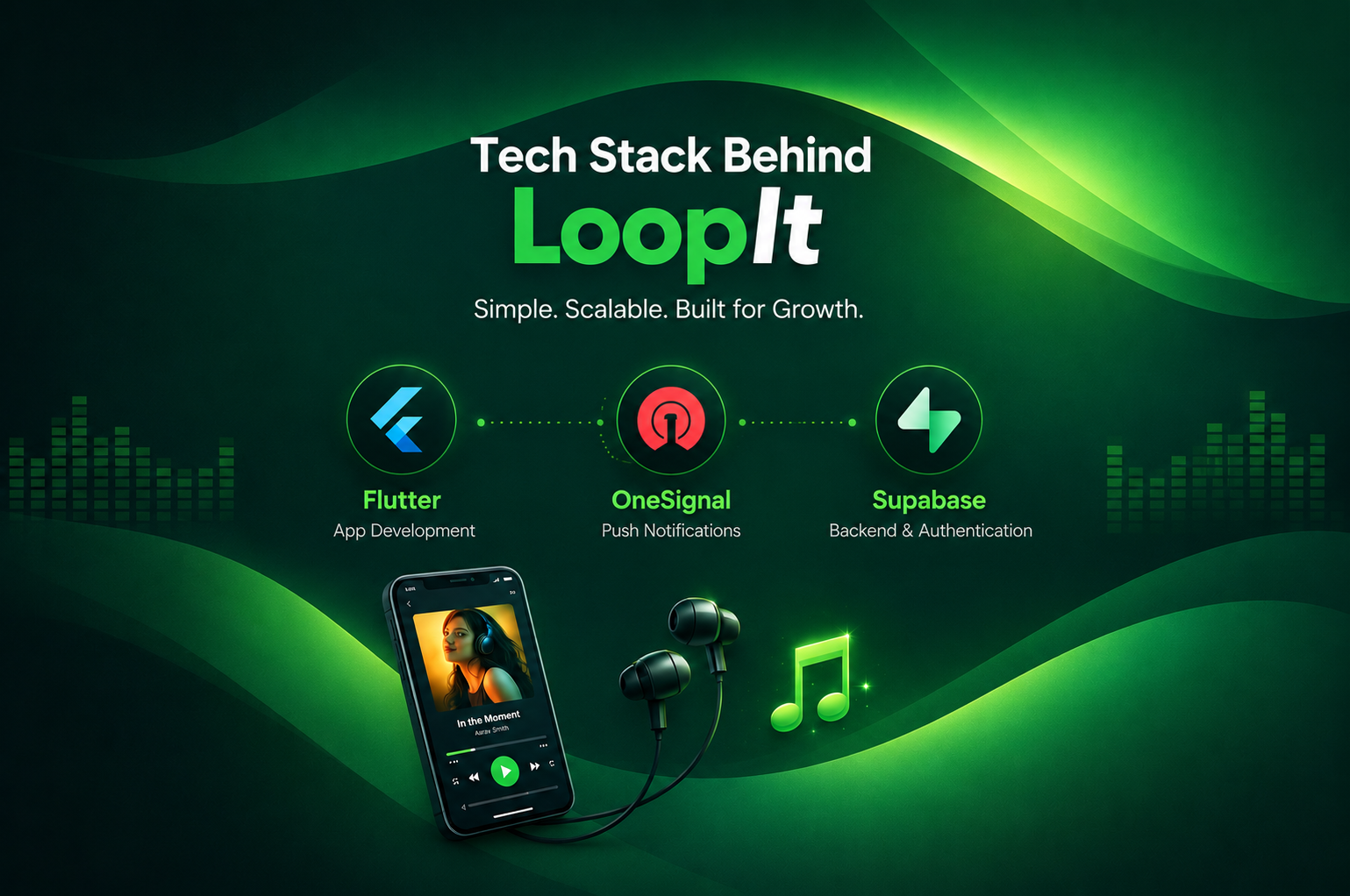
The app uses:
- Flutter for app development
- Supabase for backend and login handling
- OneSignal for push notifications
That combination made development quicker and easier to manage later. If a startup wants to change layouts, add features, or test different ideas, the process stays flexible instead of becoming messy too early.
A lot of founders are not looking for complicated infrastructure in the early stage anyway. They mainly want something stable enough to launch publicly, collect feedback, and improve step by step as more users come in.
6. Launch Your Spotify Clone App Without Spending Months Building It
Music apps take longer to build than most people expect. Things look simple in the beginning, then suddenly the team is dealing with playlists, playback bugs, artist uploads, notifications, and backend issues all at once.
That is why we built LoopIt – Music Player App.
Instead of starting with an empty project, startups can begin with the core streaming experience already structured. The music flows, player screens, playlists, and backend setup are already there, so teams can spend more time shaping the product around their audience.
The app is built with Flutter, Supabase, and OneSignal making customization much easier later on.
Some startups want to launch a podcast platform. Others want a smaller music community or creator-focused audio app. LoopIt gives them a practical starting point instead of months of repetitive setup work.
Check out the LoopIt – Music Player App template on the Arixlabs Marketplace → https://www.arixlabs.com/marketplace/loopit---music-player-app
FAQ
How long does it take to build a Spotify Clone App?
Building from scratch can take several months depending on features, backend setup, and streaming infrastructure.
Can I customize LoopIt?
Yes. The template can be customized for different use cases like podcast apps, indie music platforms, or creator-focused streaming apps.
Does the app support future scaling?
The structure is designed to handle growing users, playlists, and content more smoothly compared to starting from zero.
What tech stack is used in LoopIt?
The app is built using Flutter, Supabase, and OneSignal support.
%20(1).jpg)

View more blogs

.png)

%20(1).jpg)

.png)


Ready to develop your own product? Get in touch today!
Get in Touch