


.png)


1. Introduction
- Most founders open a vibe coding project estimate in the UK and read it the wrong way round: bottom line first, everything else skimmed.
- That single habit is why so many UK teams approve numbers they don't fully understand until several weeks into development.
- A quote isn't just a price—it's a breakdown of decisions the development team has already made about your scope, features, delivery approach, and how AI-assisted development will be used throughout the project.
- This guide explains how to get a vibe coding quote you can actually read, compare, and negotiate, without needing a technical co-founder to translate it for you.
- At ArixLabs, we've scoped and delivered production-ready vibe coding projects for startups and enterprises across a wide range of industries. That experience has shown us that the quality of an estimate often reveals the quality of the team behind it. Clear, well-structured quotes usually come from agencies with a defined delivery process, while vague estimates often lead to unexpected costs, shifting requirements, and missed deadlines.
- The insights in this guide come from those real-world delivery experiences. You'll learn what separates a reliable fixed-price vibe coding project estimate from one that's likely to grow through change requests, what questions to ask before signing, and which red flags should make you reconsider a proposal.
2. What's worth doing before you provide to get an accurate vibe coding quote?
Write a one-page brief before you ask anyone for a vibe coding project estimate in the UK. It should cover the core user flow, the platforms you're targeting, the key features you need, and any integrations you already know are required. Vague briefs produce vague numbers, and vague numbers often lead to disagreements later.
Include your expected timeline and budget range as well, since providers structure their estimates differently when they understand the project constraints upfront. The more context you provide around your goals, priorities, and must-have features, the more accurate the quote will be.
The clearer the brief, the easier it becomes to get a vibe coding quote that reflects the actual work involved rather than a provider's assumptions. At ArixLabs, we've found that well-defined project requirements are one of the biggest factors behind accurate estimates and smoother vibe coding deliveries. Founders who skip this step are often the ones who receive a fixed-price vibe coding project estimate that needs major revisions before development even begins.

3. Why do vibe coding quotes vary between firms?
Quotes vary because "vibe coding" isn't a fixed process. Some studios use it to mean rapid AI-assisted prototyping with heavy manual cleanup after. Others mean something closer to production-ready output with minimal rework. That difference alone can swing a vibe coding project estimate in the UK by thousands of pounds for what looks, on paper, like the same brief.
Fixed quote vs rough estimate for vibe coding in the UK. A fixed quote locks the price against a defined scope document, while a rough estimate is a range based on assumptions that haven't been confirmed yet. Treat a rough estimate as a starting point for conversation, not a number to budget against. Only once scope is confirmed should you expect a genuine fixed price vibe coding project in the UK figure.
Team seniority is another driver. A studio staffing your build with senior engineers who review the AI-generated code will typically charge more than one leaning fully on junior oversight. Neither is automatically wrong, but you should know which one you're paying for before you accept a fixed price vibe coding project in the UK. Location and typical overheads for UK-based teams also factor in, which is part of why a vibe coding project estimate in the UK rarely matches an offshore quote for the same brief.
4. What's usually included in a vibe coding estimate?
A proper vibe coding project estimate in the UK should clearly break down discovery and planning, core development, QA and testing, and post-launch support. If any of these areas are missing or hidden inside a vague single line item, it's worth asking why. Discovery usually covers requirements, user flows, and technical planning, while the core build is where AI-assisted development is combined with engineering review to create the product.
QA deserves its own line because AI-generated code still requires human review to identify edge cases, security issues, and performance problems before launch. Post-launch support usually covers a defined period, often a few weeks, for fixing issues that appear once real users begin interacting with the application. Hosting, third-party services, and platform fees are typically separate costs and should be clearly listed outside any fixed-price vibe coding project agreement.
At ArixLabs, we structure vibe coding project estimates around these same principles, giving clients a clear view of where time and budget are allocated rather than presenting a single unexplained number. That level of transparency helps founders understand the real scope of work and confidently evaluate whether an estimate reflects the effort required.
It's also important to confirm whether the estimate includes one revision round or multiple rounds of changes, as revision limits are one of the most common sources of confusion between clients and providers. A studio that defines these expectations upfront helps avoid unexpected costs and difficult conversations close to launch.

5. How do you weigh up quotes from different vibe coding providers?
Line up quotes side by side against the same brief, not against each other's formatting. A provider quoting lower might have simply scoped less, not worked more efficiently. Check what's excluded before comparing what's included, since exclusions are where costs quietly reappear later in what was supposed to be a fixed price vibe coding project in the UK.
Sizing up multiple vibe coding quotes. Put each quote's scope, timeline, and exclusions into one shared table so you're comparing equivalent work rather than equivalent-looking totals. This single step catches most of the pricing gaps that only surface after signing, and it makes it far easier to get a vibe coding quote you can trust rather than one that simply looks cheapest on paper.
Timelines deserve the same scrutiny as price. Two providers can quote near-identical figures while planning wildly different delivery windows, and a rushed build is rarely a cheaper one once support tickets start rolling in after launch. If you're weighing several offers side by side and one seems determined to get a vibe coding quote signed faster than the others, slow down and ask why the urgency exists.
6. Which things should you ask before accepting a vibe coding quote?
Ask what percentage of the codebase is AI-generated versus human-reviewed, and who signs off on that review. Ask what happens if scope creeps, specifically how change requests are priced and whether there's a cap before the fixed price is renegotiated. This protects you from a fixed price vibe coding project in the UK quietly becoming an open-ended one somewhere around milestone two.
Ask about ownership of the code and any third-party licences once the project ships. Ask who handles bugs discovered after the support window closes, and at what rate. Ask for a realistic delivery date, not an optimistic one, since AI-assisted builds can still hit the same integration and testing delays as traditional development. A provider who answers these clearly, without hedging, is one worth trusting to get a vibe coding quote finalised properly, and to actually hold to it.
It also helps to ask how the provider handles UK-specific requirements, things like GDPR compliance, VAT on invoicing, and data residency if your users are UK-based. A provider who's fielded these questions before for a vibe coding project estimate in the UK will usually have answers ready rather than needing to check and get back to you, which is itself a useful signal about how the rest of the build will go.

7. How detailed should a vibe coding pitch be?
Detailed enough that you could hand it to a second developer and they would understand the plan without needing a long explanation. A thin pitch with only a headline price and delivery date usually means the provider hasn't completed proper scoping yet, making any vibe coding project estimate in the UK attached to it little more than an educated guess.
What should a detailed vibe coding pitch include in the UK? Look for a clear feature breakdown, proposed development approach, project timeline, key milestones, testing plan, and the team members who will actually be involved in the build. The more detail included upfront, the less room there is for confusion once development begins.
At ArixLabs, we believe a strong vibe coding pitch should make the delivery process clear from the beginning, including what will be built, how it will be reviewed, and what outcomes the client can expect. Founders should understand exactly what they are investing in rather than receiving a vague promise of faster development. A pitch that lacks these details is often a sign that the project scope hasn't been properly defined yet.
Founders who push for this level of detail early are far more likely to end up with a fixed-price vibe coding project in the UK that stays predictable throughout the build, rather than one that changes significantly after development begins.
8. What counts as a red flag in a vibe coding quote?
A number with no supporting breakdown is the first red flag. So is a quote that arrives within minutes of a first call, since real scoping takes at least a day or two even for a straightforward brief. Be wary of providers unwilling to put payment milestones in writing, or who resist a written scope document altogether before offering a fixed price vibe coding project in the UK.
Negotiating a vibe coding job estimate. If a number feels high, ask which specific line items are driving the cost rather than asking for a blanket discount. Providers will usually trim scope or adjust the timeline before they cut their rate, and that trade-off is often the better deal anyway when you're trying to get a vibe coding quote that fits your actual budget.
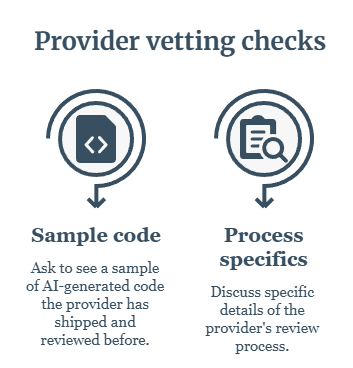
Watch for quotes that dodge questions about AI-generated code quality or refuse to explain their review process. A vibe coding project estimate in the UK that can't withstand direct questions probably won't withstand a real build either, however tidy it looks on the page.
One final check worth doing: ask to see a sample of AI-generated code the provider has shipped and reviewed before, not just a demo screen. Providers confident in their process are usually glad to get a vibe coding quote discussion into specifics like this, while ones papering over weak review practices tend to steer the conversation back to price instead.
9. FAQ
How do I get an accurate vibe coding estimate, if you're shipping in the UK?
Write a clear brief covering user flow, platforms, and integrations before you ask, and confirm the provider itemises discovery, build, QA, and support separately.
Why do vibe coding quotes differ so much, if you're shipping in the UK?
Different studios define vibe coding differently, and team seniority, review depth, and scope assumptions all shift the number even for similar-looking briefs.
Is a low vibe coding quote a red flag, if you're shipping in the UK?
Not automatically, but check what's excluded first. A low number with a thin scope document usually means costs reappear later as change requests.
What should I ask before signing a vibe coding proposal, if you're shipping in the UK? Ask about the AI-to-human review ratio, how change requests are priced, code ownership terms, and who handles post-launch bugs once support ends.
%20(1).jpg)

View more blogs
.jpg)
.png)
.png)
.png)
.png)


.png)
.png)
Ready to develop your own product? Get in touch today!
Get in Touch