.png)

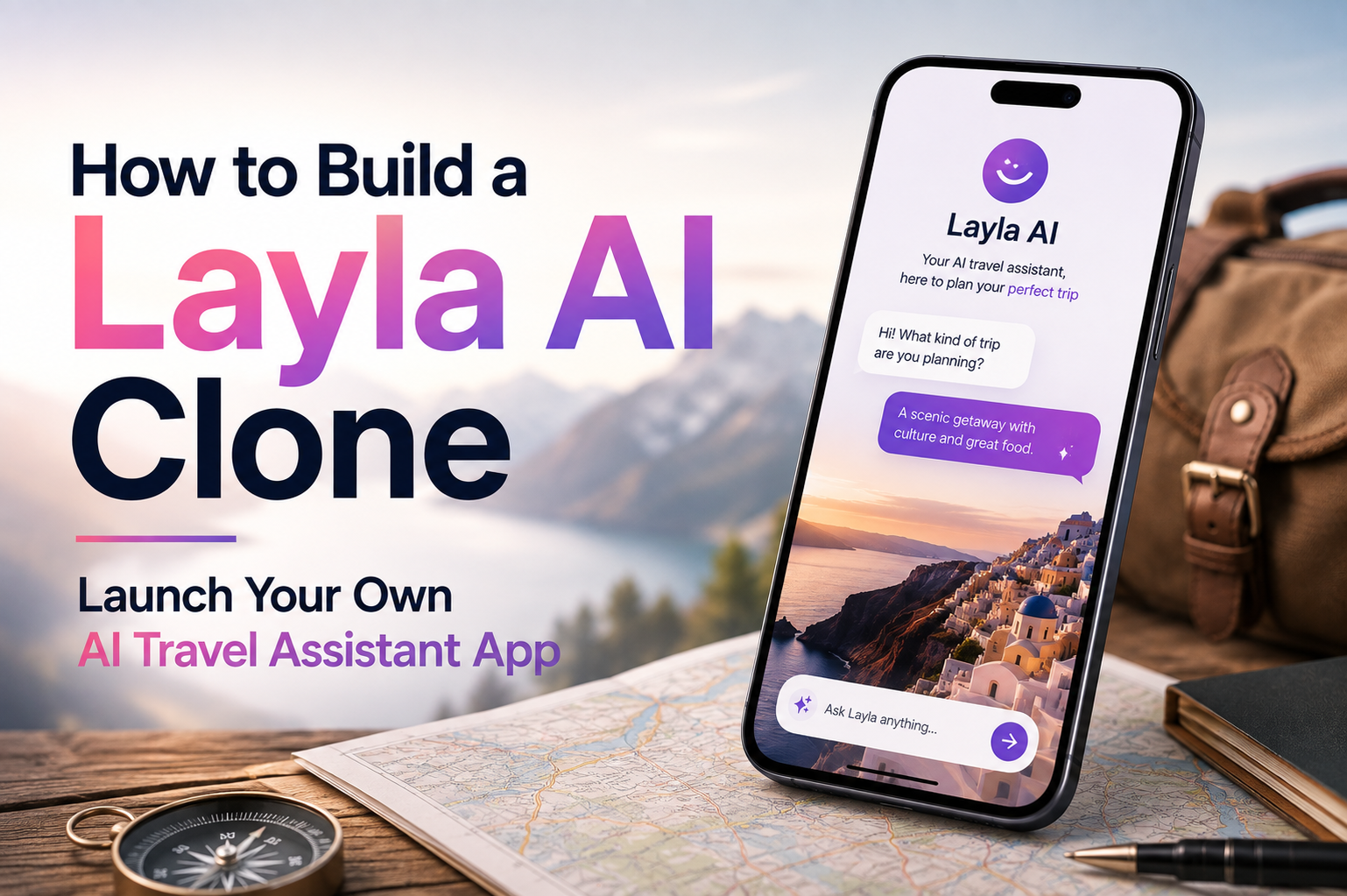


1. What Does Layla AI Actually Do, and What Would a Clone Need to Match It?
Layla AI's pitch is simple: text an AI assistant what kind of trip you want, and it hands back a plan instead of a search results page. No filters, no twelve open tabs comparing flights — just a conversation that turns into an itinerary. That's a meaningfully different product than a booking site with a chatbot bolted on, and it's why a real Layla clone app has to get the AI layer right before anything else matters.
Arixlabs (previously FlutterFlowDevs) builds exactly the kind of software that starts from that AI layer instead of retrofitting it. Its travel category entry, WayNest, is a travel app template built around conversational trip planning first — booking, budgeting, and admin tooling are wired around the AI, not stacked on top of a generic itinerary viewer.
That distinction sounds small until you try to build it. A chatbot that just calls a generic language model with a travel-themed system prompt falls apart the moment a user asks something specific — a layover preference, a dietary restriction, a request to swap one city for another mid-plan. Layla's actual value is in the AI logic that holds up under those edge cases, and that's the piece most quick clone attempts skip entirely in favor of shipping a nice-looking chat screen.
1.1 How Quickly Can You Launch With a Travel App Template?
With WayNest, branding, API keys, and deployment typically take days rather than the four to six months a from-scratch Layla clone app usually needs before the AI logic even works end to end.
2. WayNest — A Ready-Made Layla Clone
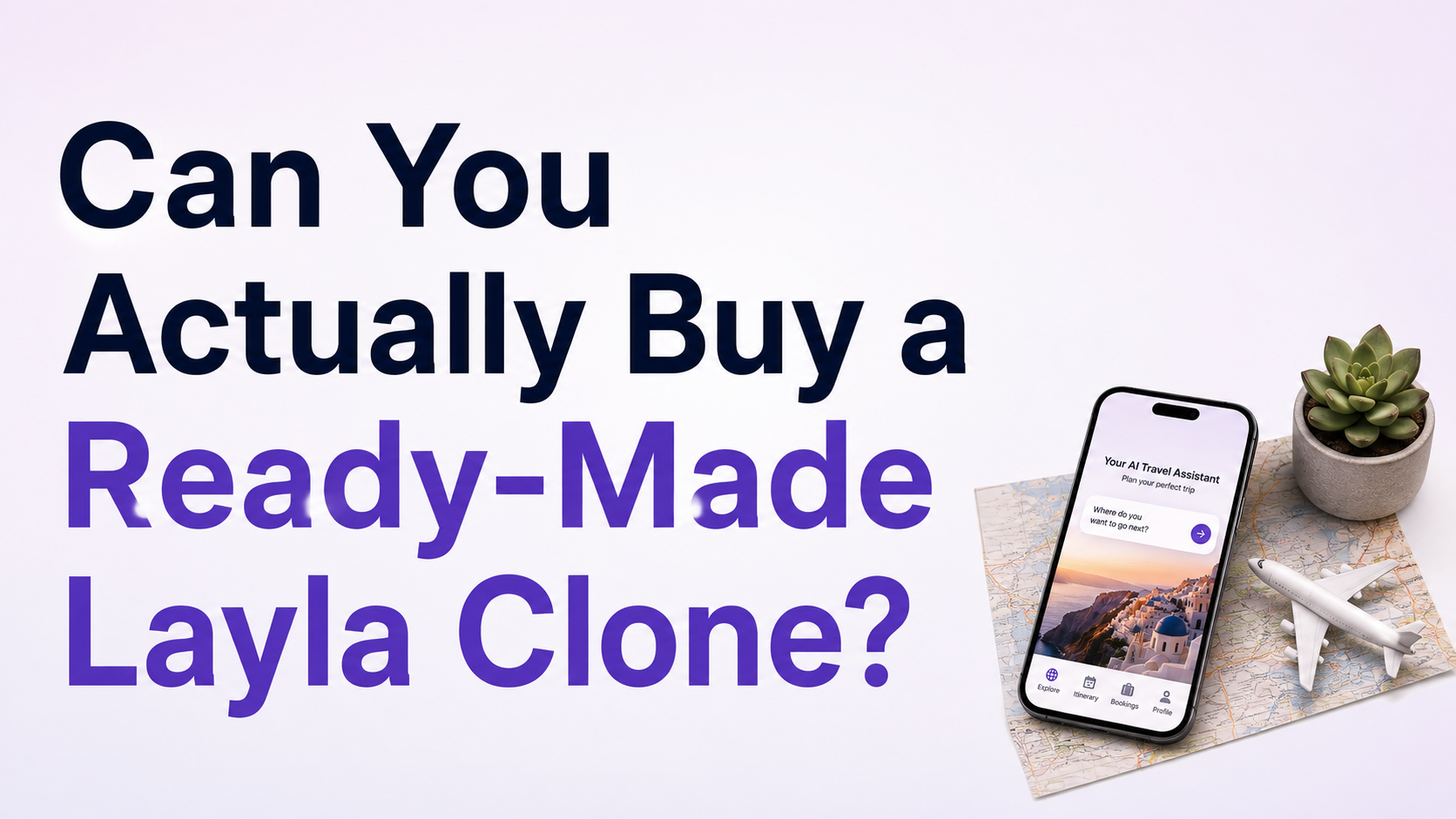
2.1 Can You Actually Buy a Ready-Made Layla Clone?
Yes — and the honest answer to how is that WayNest isn't a UI skin with a chatbot widget dropped in. It's a working AI trip planner clone: users describe a trip in plain language, and the AI, powered by Gemma, returns a day-by-day itinerary with costs, accommodation picks, restaurant suggestions, and travel times attached, the same core loop Layla built its reputation on. Most sellers advertising a ready made Layla clone can't say the same once you ask to see the AI actually run.
What separates a ready made Layla clone worth buying from a demo is whether the conversation actually does something. WayNest's AI Travel Assistant handles real editing mid-chat — swap a day, adjust the budget, regenerate an activity — not scripted responses that reset the moment you ask something the demo wasn't built to answer.
3. How This Kind of AI Assistant Makes Money
Copying the interface doesn't copy the business model, and this is where a lot of AI-assistant clones stall after launch. WayNest's admin portal supports the same subscription structure that funds most AI trip planner clone products: a Free tier capped at one active trip, and Premium Monthly or Premium Annual tiers that unlock unlimited trips, offline maps, and price alerts.
Booking commission adds a second revenue layer on top of subscriptions — flight, hotel, and activity bookings routed through partner APIs generate commission independent of what users pay for the AI itself. For a travel app template built as an actual business rather than a portfolio piece, that combination — subscription plus commission — is usually what separates a project that breaks even from one that doesn't. Layla's own model leans almost entirely on subscriptions; adding booking commission on top is one of the more direct ways a clone can out-earn the product it's modeled after.
4. What Features Make an AI Trip Planner Clone Worth Buying?
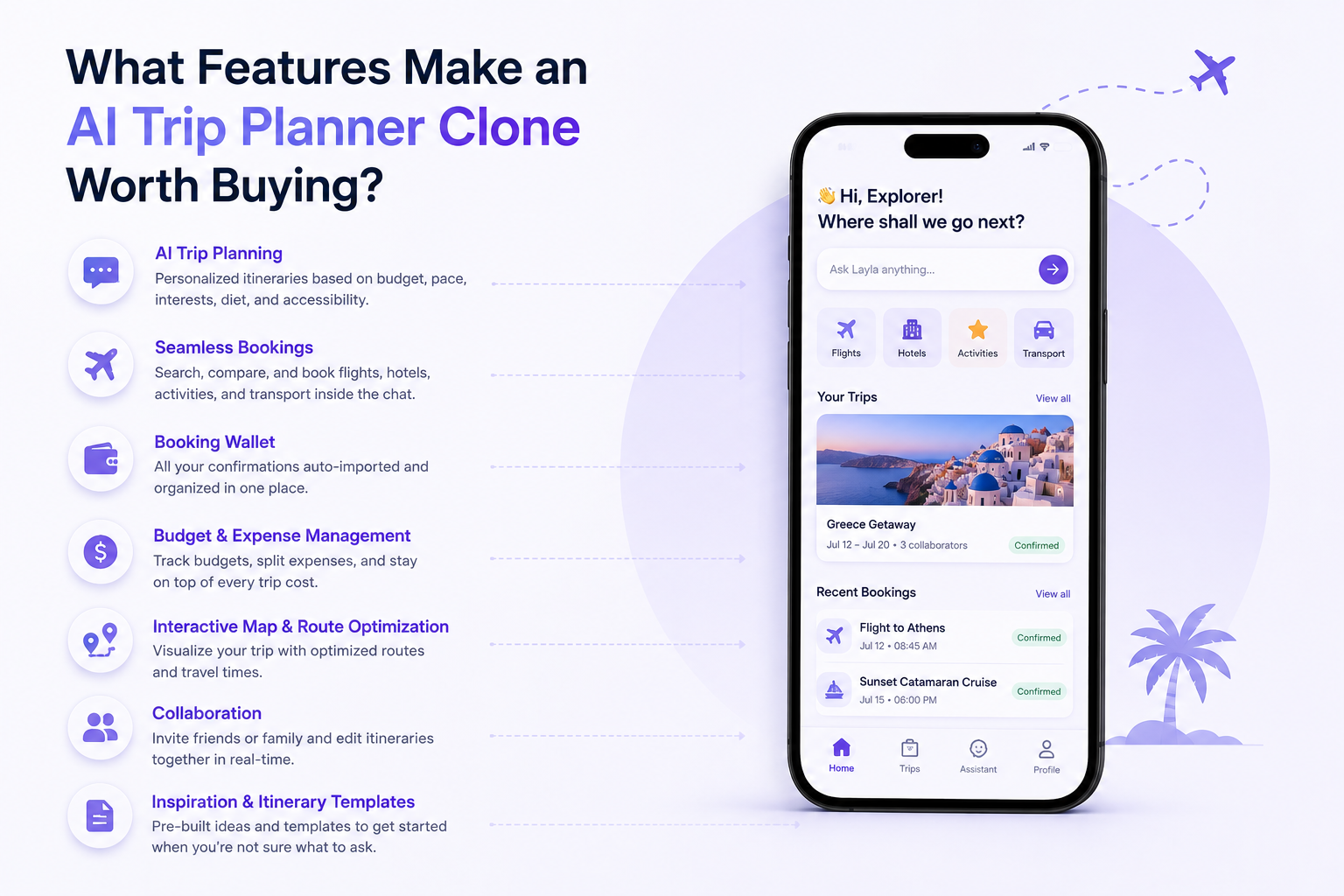
A real AI trip planner clone needs more than a chat window, and this is where a lot of Layla clone script listings show their gaps — a working assistant with no supporting app around it. WayNest's mobile app opens with the standard flow — splash, welcome, sign-in via email/password, Google, or Apple — then drops users into a home screen with four tabs: Home, Trips, Assistant, Profile.
From there, the AI does the heavy lifting: budget, pace, interests, dietary needs, and accessibility all factor into the generated plan, with regeneration and manual overrides available at every step. Booking sits underneath the conversation — search, compare, and book flights, hotels, activities, and ground transport without leaving the chat thread, with confirmations auto-importing into a booking wallet. Budget tracking, expense splitting, and an interactive map with route optimization round out a travel app template that goes past what a pure conversational assistant like Layla offers on its own.
Collaboration matters too — Trip Details lets users invite collaborators and edit an itinerary together, turning a one-person AI conversation into something a group can actually plan around. Inspiration and pre-built itinerary templates give first-time users a starting point when they aren't sure what to ask the AI yet — a small feature that matters more than it looks, since a blank chat box is the single biggest drop-off point in any conversational product.
5. Customizing Your AI Travel Assistant
Cloning the conversation is one thing; owning it is another. WayNest ships as a genuinely white-label Layla clone app — swap the logo, color scheme, and copy, and the admin portal lets you control subscription plans, trial periods, and feature limits without touching code.
5.1 How Much Can You Actually Customize an AI Trip Planner Clone Once You Own It?
More than most buyers expect. Every screen in this AI trip planner clone is editable, and the AI prompt logic itself can be tuned — adjust tone, add domain-specific instructions, or restrict recommendations to a niche (luxury travel, budget backpacking, corporate trips) without rebuilding the assistant from scratch.
Pricing your own travel app template — Free tier, Premium Monthly, Premium Annual — takes minutes from the dashboard rather than a dev sprint. Agencies use this to run one underlying codebase across multiple client rebrands, each with its own pricing, its own AI tone, and its own booking-partner setup, without maintaining separate templates per client.
6. What's Actually Running Under a Travel App Template Like WayNest?
WayNest runs on Flutter for the frontend, shipping to iOS and Android from a single codebase. Supabase handles the backend — auth, database, storage, and real-time sync — without standing up separate infrastructure. Google Maps powers navigation and route optimization, and Gemma drives the conversational AI itself.
6.1 Does a Layla Clone App Hold Up as Your User Base Grows?
Yes. Supabase scales with usage instead of forcing a re-architecture once conversation volume grows, and Flutter's single-codebase model keeps a Layla clone app cheap to maintain as it scales past a few thousand active users. The AI layer scales independently of the app shell, so a spike in chat volume doesn't mean rebuilding the booking or admin systems alongside it.
That separation is one of the more overlooked things a well-built travel app template gets right. A monolithic architecture where the AI, booking, and admin layers are tangled together tends to break in expensive ways the moment one piece needs to scale faster than the others — which is exactly the scenario a conversational AI product runs into once it starts getting real traffic.
7. Do You Get Real Layla App Source Code, or Just a UI Shell?
This is where most Layla clone script listings fall apart. A lot of what's sold on generic marketplaces is a chat UI with placeholder responses — no working AI integration, no real backend, nothing that functions past the first screenshot. WayNest ships the opposite: full Layla app source code-equivalent access to every screen, every AI prompt, and every backend function, yours to modify or hand to a developer. Read through the actual Layla app source code before buying anything, if the seller allows it — it's the fastest way to tell a working product from a screenshot.
That distinction matters because the AI prompt engineering is the actual product. Anyone can clone a chat interface. Getting the AI to ask the right follow-up questions, generate a coherent day-by-day plan, and handle a mid-conversation change gracefully is the part that took real engineering time — and it's the part a Layla clone script without working prompts simply doesn't include.
Security follows the same logic. Supabase's row-level security policies gate data access at the database layer, not just in the app's front-end code, which matters more here than in most templates since conversational AI apps handle a steady stream of personal travel and payment-adjacent data — another reason to actually check the Layla app source code rather than trust a landing page's claims about it.
Deployment runs on standard Flutter and Supabase tooling, so any developer familiar with either stack can pick up this Layla app source code without a ramp-up period specific to the template. That portability is what makes it a real asset rather than a black box tied to one vendor — buyers who actually read through a Layla clone script before purchasing tend to notice this is where cheap listings and production-ready templates diverge fastest: one has real backend functions behind the AI, the other has a UI calling an API key that expires the moment support stops answering emails.
8. What It Costs to Build a Layla Clone vs. Buy One
8.1 How Much Does It Cost to Build a Layla Clone App From Scratch?
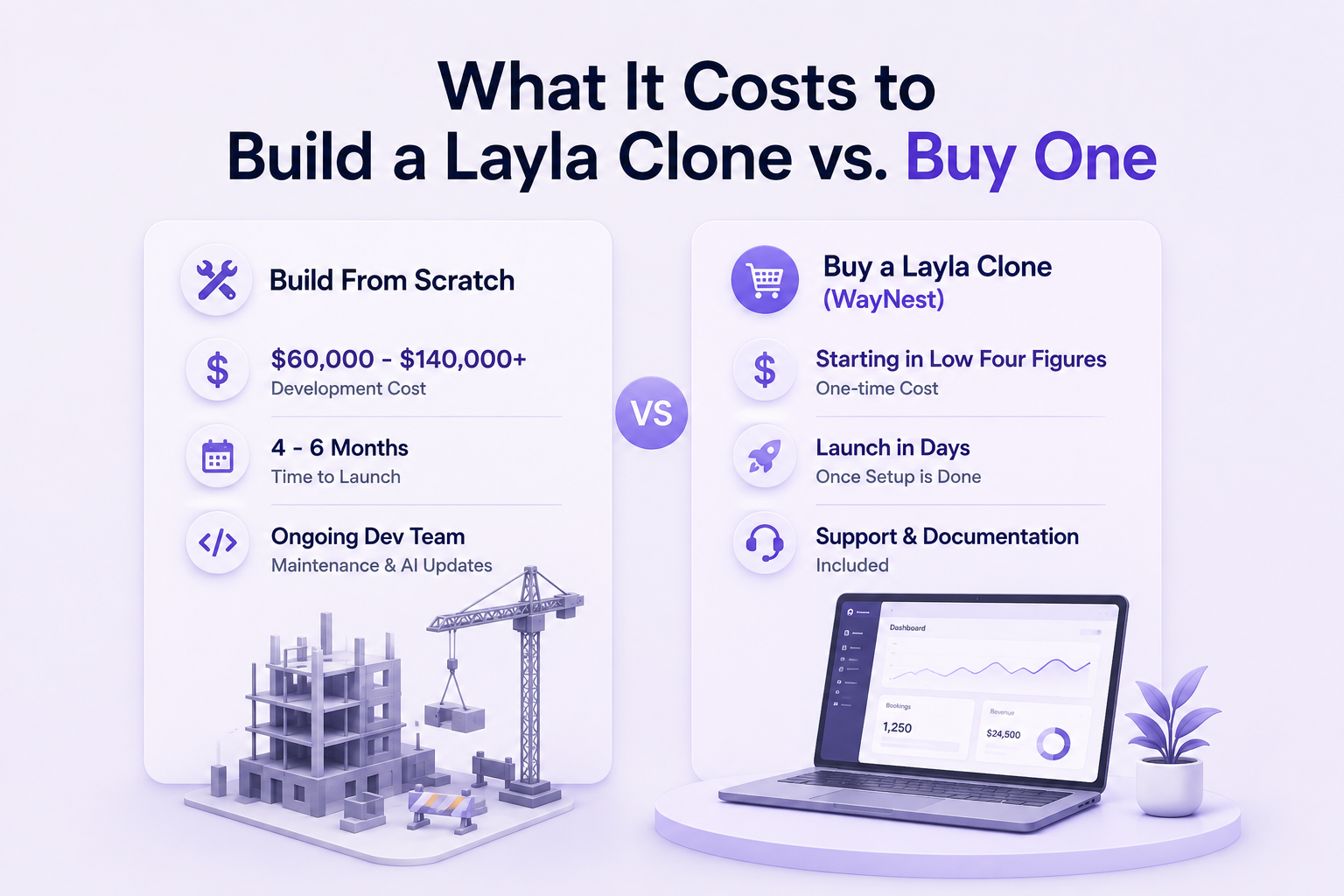
A custom Layla clone app — conversational AI, booking integrations, and admin tooling included — typically runs $60,000 to $140,000, plus four to six months before it's usable. WayNest, sourced through the Arixlabs marketplace, typically starts in the low four figures and deploys in days once branding and API keys are in place — support and documentation included, unlike most unverified Layla clone script listings sold with no guarantee the AI logic even works.
8.2 Where Do You Actually Find a Working Layla Clone Script?
Not on generic template marketplaces, usually. Most listings sell a chat UI without the AI logic that makes the original worth cloning. Arixlabs built WayNest specifically to close that gap — the AI itinerary engine, the booking layer, and the admin dashboard all work together, not three separate products stitched under one listing. It's the same reason a serious ready made Layla clone search tends to end at a purpose-built travel app template rather than a marketplace grab-bag of half-finished chat UIs.
Run the math past the sticker price and the case gets stronger. A six-month custom build means six months without revenue against a live product, on top of the ongoing cost of a dev team to maintain the AI layer once it ships. A template-based build starts collecting subscription revenue in the same week it launches.
9. Clone App vs. Pure No-Code Builders
The other path founders consider is a generic no-code app builder, and it's worth being direct about where that breaks down for a conversational AI product specifically. No-code tools handle CRUD screens and static content well. They handle multi-turn AI conversation state, prompt chaining, and real-time itinerary regeneration badly, because those aren't drag-and-drop problems — they're the exact engineering work a real AI trip planner clone actually needs.
Founders who start a Layla clone app on a no-code platform usually hit the wall around the point where the AI needs to remember context across multiple messages and adjust a plan accordingly. Most pure no-code AI integrations handle single-turn requests fine and fall apart on anything conversational. A purpose-built travel app template like WayNest skips that failure mode because the AI logic was written for exactly this use case, not adapted from a generic chatbot plugin bolted onto an app builder.
10. Who Should Build This
10.1 Do You Need to Know How to Code to Launch a Layla Clone App?
No. Branding, subscription pricing, and content all run through the admin portal — no code required for a standard launch. Founders who want deeper customization can bring in a developer later using the full source access, but it's optional.
Solo founders testing an AI-travel idea get a working AI trip planner clone without spending runway on engineering before they've validated demand. Travel agencies get a conversational tool they can hand to clients under their own brand instead of pointing them to Layla's own app. Dev shops use WayNest as a resellable base — one underlying travel app template, reskinned for each client who wants "an AI assistant like Layla" without the year-long build, each shipping with its own ready made Layla clone foundation and its own booking-partner setup.
11. FAQ
1. Is the WayNest Layla Clone Template Production-Ready?
Yes. It ships as a tested, documented ready made Layla clone, with the mobile app, admin portal, and AI engine already integrated — not a proof-of-concept.
2. Do I Own the Source Code After Buying the Template?
Yes. Purchasing WayNest gives you full Layla app source code ownership, so you can modify, extend, or hand it to your own developer at any time.
3. Does the Template Come With an Admin Dashboard?
Yes. The admin web portal covers user management, subscriptions, booking-partner integrations, notifications, and platform settings — the operational layer that separates a real travel app template from a front-end-only demo.
4. Can I Rebrand the App With My Own Name and Branding?
Yes. Swap the logo, colors, and app name throughout the mobile app and admin portal — no code changes required to turn this ready made Layla clone into your own branded product.
12. Launch Your Layla Clone App This Week
Building a working conversational AI, booking infrastructure, and an admin dashboard from scratch costs months and well into six figures. WayNest gives you the same Layla clone app — AI trip planning, real booking, and full admin control — ready to rebrand and deploy in days.
Check out the WayNest Layla Clone Template on the Arixlabs Marketplace → https://www.arixlabs.com/marketplace/waynest--ai-travel-planning-app
%20(1).jpg)

View more blogs
.png)


%20(1).jpg)
.png)
_a_change_the__2026__to.jpg)
.png)
.png)
Ready to develop your own product? Get in touch today!
Get in Touch