.jpg)


1. Why FlutterFlow Is Suddenly Everywhere in Australia
This shift didn’t take years. It happened fast.
Traditional app development in Australia has been struggling with the same issues, long timelines, rising costs, and constant delays. By the time an app is ready, the idea often needs to change. That model just isn’t working anymore.
That’s where a FlutterFlow development agency comes in.
Instead of building everything from scratch, teams now move faster, designing visually, connecting backend services quickly, and making changes without long dev cycles. What used to take months can now take weeks.
Startups are leading this change. They don’t need perfect products, they need something live. Fast. That’s exactly why FlutterFlow app development is becoming the go-to choice for early-stage products.
And it’s not just startups.
Even established companies are shifting because "traditional workflows" feel slow and restrictive. Small updates shouldn’t take days. Testing new ideas shouldn’t require heavy planning.
That’s why more FlutterFlow agencies in Australia are emerging. They’re solving a real problem: speed without sacrificing quality.
2. Traditional Development vs FlutterFlow
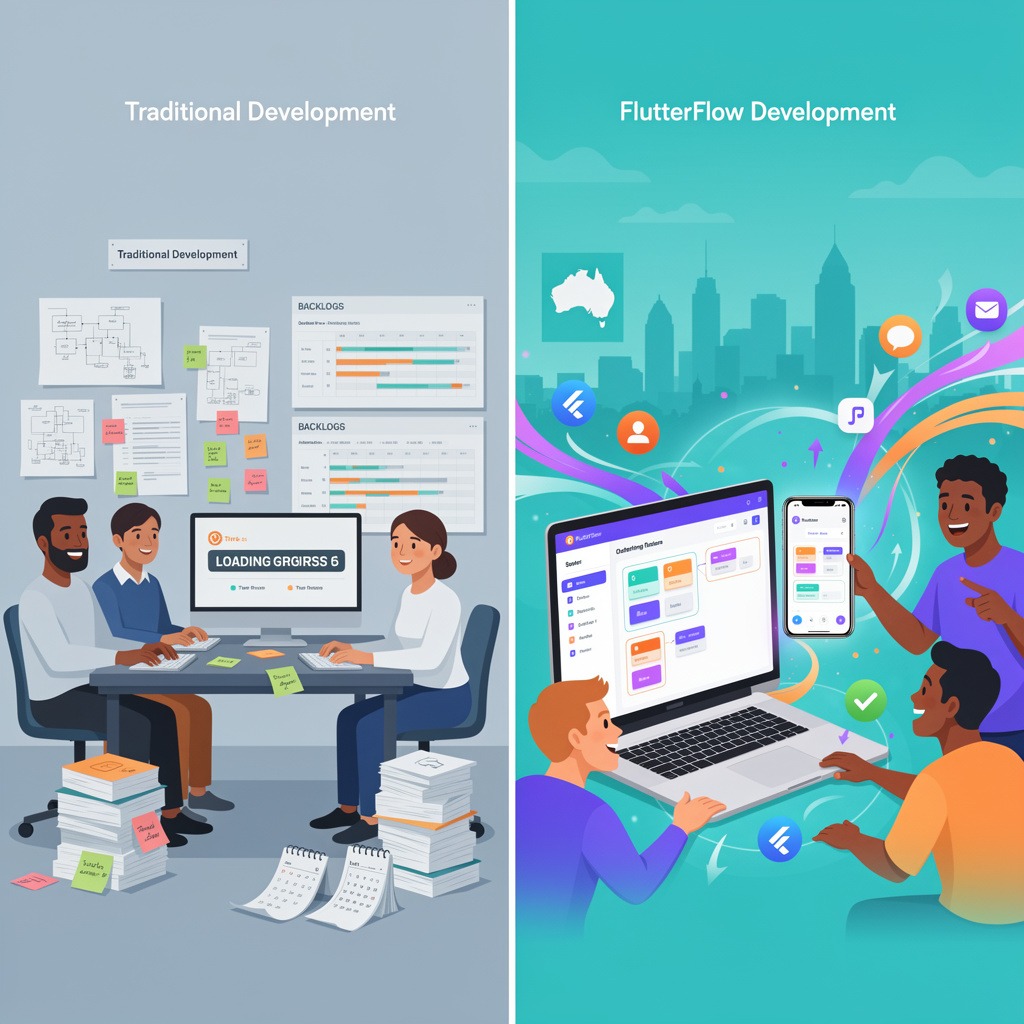
Traditional app development isn’t wrong. It just moves… slowly.
You start with planning. Then design. Then development. Then testing. Somewhere in between, things slip. A feature takes longer. A bug delays everything. Suddenly, a simple app takes months.
That’s pretty common in mobile app development in Australia.
Now compare that with FlutterFlow app development.
You’re not waiting on long cycles. You build screens visually. You tweak things on the go. Want to test a feature? You don’t need to schedule it, you just try it.
A founder I spoke to put it simply: “We stopped planning everything upfront and started shipping faster.” That’s the shift.
Here’s how it actually feels different:
- Changes don’t get stuck in backlogs
- You can test ideas while building, not after
- Iteration becomes part of the process, not a separate phase
And yeah, speed is the obvious benefit. But flexibility is what really matters.
With traditional setups, even small changes can create friction. With FlutterFlow app development, those changes feel… lightweight. Almost immediate.
That’s why teams aren’t just experimenting with it, they’re switching to it.
3. What a FlutterFlow Development Agency Actually Does
Most people think a FlutterFlow development agency just builds apps.
Not really.
The good ones do a lot more than that, and this is where many projects either succeed or quietly fail.
You’re not just hiring someone to “use a tool.” You’re bringing in FlutterFlow experts who understand how to turn an idea into something usable, testable, and scalable.
Here’s what that actually looks like in practice:
- They simplify your idea into something buildable (not over-engineered)
- They plan features based on speed, not perfection
- They design flows that users can actually navigate easily
- They connect backend systems without making things messy later
- They help you avoid rebuilding everything after version one
And honestly, this part matters more than people think.
Because FlutterFlow itself is just a tool. A powerful one, but still just a tool.
What makes the difference is how it's used.
A random freelancer might build what you ask for. But experienced FlutterFlow experts will challenge it. They’ll cut unnecessary features. They’ll focus on what actually needs to go live first.
That’s why businesses prefer agencies over going solo.
It’s not about building faster, it’s about building the right thing fast.
4. Why Startups Prefer FlutterFlow for MVPs
Startups don’t fail because of bad ideas. They fail because they take too long to test them.
That’s why MVP development matters so much.
Instead of building a “complete” product, startups now focus on getting something live, fast. Something users can actually try. Something that gives real feedback.
This is where FlutterFlow app development fits perfectly.
You can go from idea → working app in weeks, not months. And more importantly, you can keep changing it based on what users do, not what you assumed.
That changes how products are built.
- Launch early, even if it’s basic
- Test with real users
- Fix what doesn’t work
- Add features only when needed..
A good FlutterFlow development agency helps make this process smoother. They won’t push you to build everything at once. They’ll focus on getting version one out quickly, then improving it step by step.
Because here’s the reality: most first versions are wrong.
And that’s okay.
With MVP development, the goal isn’t perfection. It’s learning fast, and adjusting even faster.

5. Can FlutterFlow Handle Real Apps?
This is usually the moment people pause.
“Cool… but will it actually hold up when real users come in?”
Fair question.
With FlutterFlow app development, you’re not limited to basic demos. You can build proper flows, logins, dashboards, payments, all of that. I’ve seen teams run full products on it, not just prototypes.
But, and this matters, it depends on how you build.
If you just drag, drop, and hope for the best, things get messy fast. That’s where FlutterFlow experts come in. They structure things properly from the start, especially when it comes to backend connections and scaling later.
Most apps plug into Firebase or APIs anyway, so FlutterFlow fits right into that setup.
Now, is it perfect for everything? No.
If you’re building something extremely custom or heavy on complex logic, you might hit limits. But honestly, most startups aren’t there yet.
What they need is something that works, can grow, and doesn’t take forever to launch.
And for that, FlutterFlow does the job, pretty well.
6. Choosing the Right FlutterFlow Agency
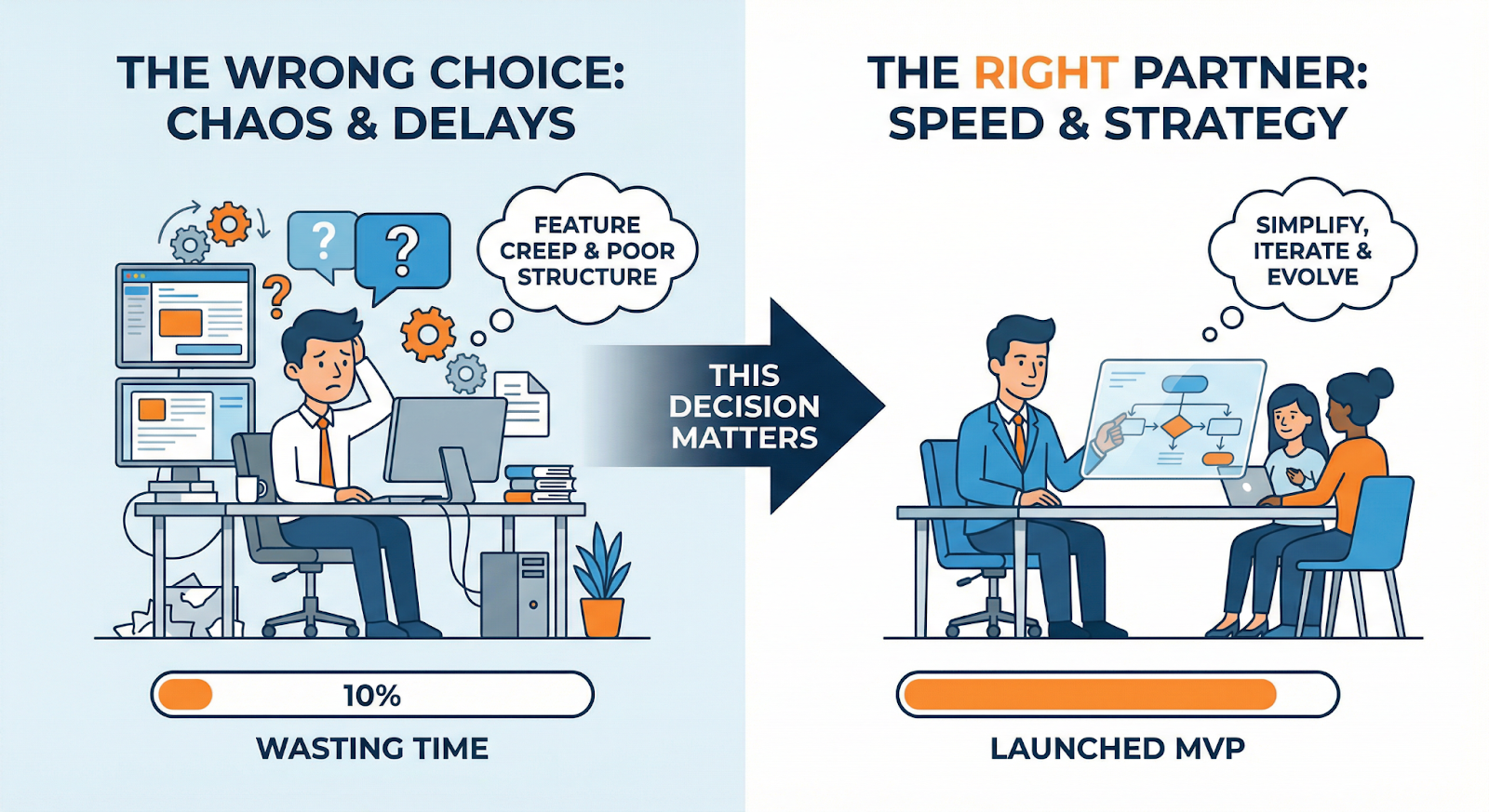
Not all agencies are the same. And this decision? It can save you months, or waste them.
A lot of teams jump into FlutterFlow app development thinking the tool will solve everything. It won’t. The people using it matter more.
Here’s where things usually go wrong:
- Agencies that just “build what you ask” without questioning it
- Overcomplicating version one with unnecessary features
- Poor structure that creates problems later
A good FlutterFlow development agency does the opposite.
They simplify.
They push back when something doesn’t make sense. They focus on getting a working product out instead of chasing perfection. And they think beyond just launch, how this app will evolve.
If you’re evaluating options, look for this:
- Do they talk about speed and iteration, or just features?
- Can they explain trade-offs clearly?
- Have they built real apps, not just demos?
- Do they understand MVP development, or are they trying to build everything at once?
Also, talk to the actual team, not just sales.
Because in the end, you’re not hiring a tool. You’re trusting people to shape your product.
And that decision shows up later, in your timelines, your costs, and how smoothly things actually run.
7. What’s Next for FlutterFlow in Australia
This isn’t a short-term trend.
What’s happening with FlutterFlow app development in Australia feels a lot like what happened with website builders years ago. At first, people doubted them. Then suddenly… everyone was using them.
We’re at that shift again, but for apps.
More businesses are realizing they don’t need to wait months to launch. They don’t need large dev teams for every update. They just need something that works, can improve quickly, and doesn’t drain resources.
That’s why FlutterFlow agencies in Australia are growing steadily. Not because it’s “new,” but because it solves real problems, speed, flexibility, and control.
And it’s not replacing traditional development entirely.
It’s changing when and how it’s used.
Teams are starting with FlutterFlow, validating ideas faster, and only moving to heavier builds when absolutely necessary. That alone changes how products are planned.
So where is this going?
More adoption. Faster launches. Leaner teams.
And honestly, it’s hard to see that reversing anytime soon.
%20(1).jpg)

View more blogs

.png)
.png)
.png)
.png)


.png)
.png)
Ready to develop your own product? Get in touch today!
Get in Touch