




1. Introduction
Every founder asking about vibe coding cost in the USA wants one thing: a real number, not a sales pitch. This piece breaks down exactly what you're paying for, why prices swing so wildly, and where the number actually lands when you're shipping in the US. The real range for vibe coding cost in the USA depends on scope, tooling, and who's holding the keyboard. The cost to vibe code an app in the USA changes significantly between a simple MVP and a production-ready product, and comparing vibe coding cost vs traditional development cost in the USA isn't as simple as saying one is always cheaper than the other.
At ArixLabs, we've spent the last several years helping startups and enterprises build production-ready applications using modern vibe coding workflows. From rapid MVPs to complex, scalable platforms, we've seen firsthand where vibe coding dramatically reduces development time, where experienced engineering still makes all the difference, and why two projects with similar ideas can end up with very different budgets. The insights in this guide come directly from those real-world projects, giving you a practical understanding of what it actually costs to build with vibe coding today.
2. What does vibe coding cost, if you're shipping in the US?
The vibe coding cost in the USA typically starts around a few thousand dollars for a lean MVP and climbs into the tens of thousands for a fuller product. There's no single number because the range depends heavily on scope, integrations, and how much human engineering review sits behind the AI-generated code.
A basic prototype built through prompt-driven tools can run low, sometimes under $3,000, if the founder is technical enough to review and patch the output themselves. Add authentication, a real database, payment flows, or API integrations, and the cost to vibe code an app in the USA rises quickly because someone still has to test, secure, and stabilize what the AI produced.
This is where the gap between "cheap" and "usable" shows up. Vibe coding cost in the USA isn't just the prompt-to-code step, it's everything that happens after: debugging, security review, and making sure the app doesn't break the moment real users touch it. Teams that skip this step usually pay for it later, just under a different line item.
For most founders comparing quotes, the real question isn't "what's the lowest number I can find," it's "what does that number actually include." A quote that only covers initial generation, with no review or testing built in, is not the same product as one that includes stabilization. Two providers can quote the same cost to vibe code an app in the USA and hand back very different levels of production readiness.
3. Which factors drive vibe coding build pricing, if you're shipping in the US?
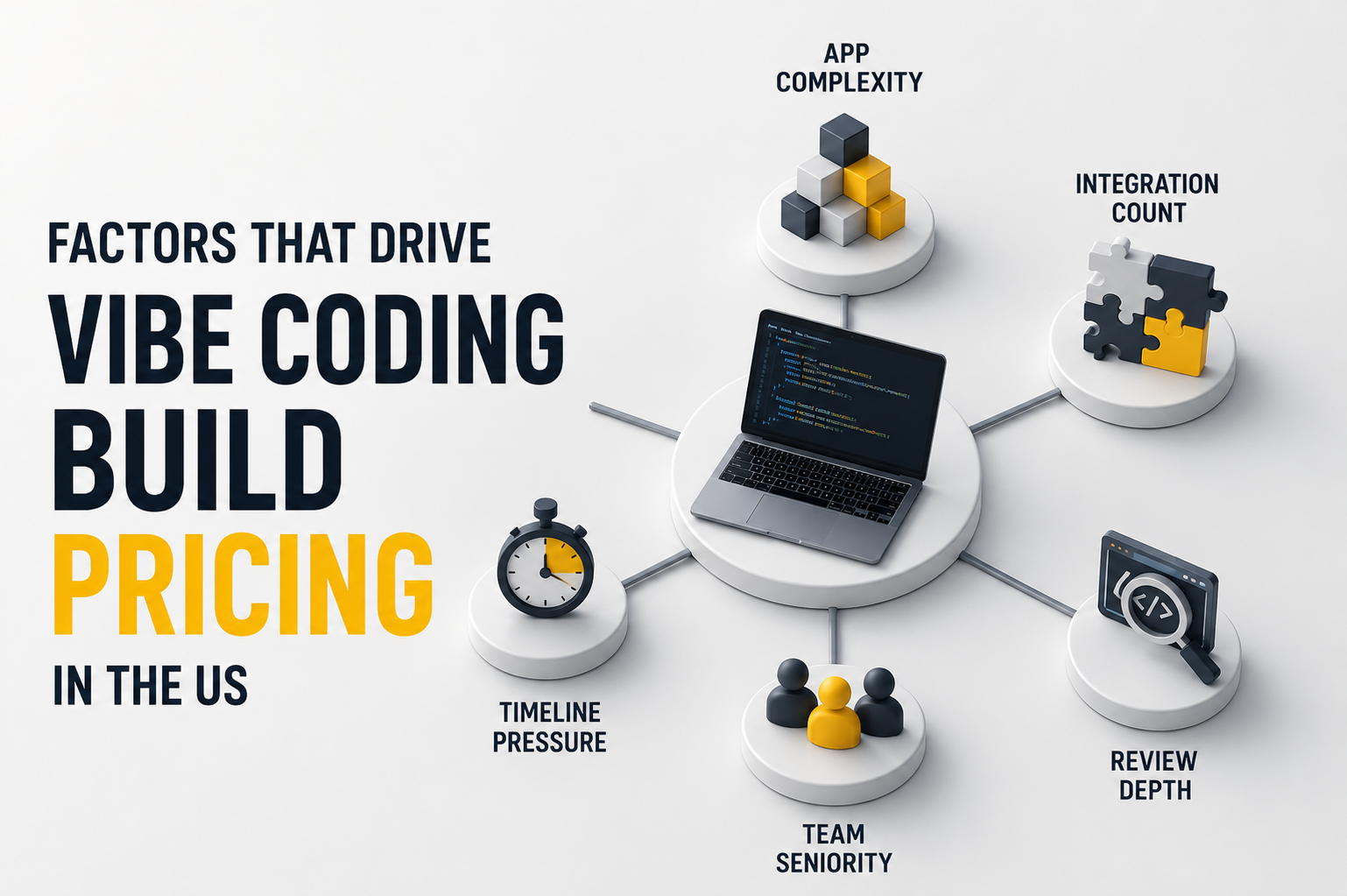
Five factors influence the cost of a vibe coding project more than anything else: application complexity, integrations, code review and testing, team experience, and delivery timeline. Each affects the budget differently, and overlooking any one of them can lead to costs that exceed the original estimate.
Application complexity is the most obvious factor. A simple MVP with a handful of screens costs significantly less than a multi-user platform with dashboards, role-based permissions, workflows, and advanced business logic. Integrations also have a major impact. Every payment gateway, third-party API, authentication provider, database, or external service requires additional setup, testing, and validation that AI-generated code alone can't eliminate.
Code review and quality assurance are often the hidden cost drivers. Vibe-coded applications still need experienced developers to identify logic errors, security vulnerabilities, performance issues, and edge cases before deployment. Skipping this step may reduce the initial development cost, but it often leads to expensive fixes later. Team experience also matters. Senior engineers can review AI-generated code more efficiently, make better architectural decisions, and resolve issues faster, which frequently lowers the overall project cost despite higher hourly rates. Finally, delivery timelines affect pricing as well. Accelerated schedules typically require additional resources and coordination, increasing the total project cost.
Tool selection is another important consideration. Different vibe coding platforms produce different levels of code quality and maintainability, directly influencing how much review, refinement, and testing is needed before launch. Choosing the right platform from the outset is almost always more cost-effective than changing tools midway through development.
4. How does vibe coding cost compare to traditional development, if you're shipping in the US?
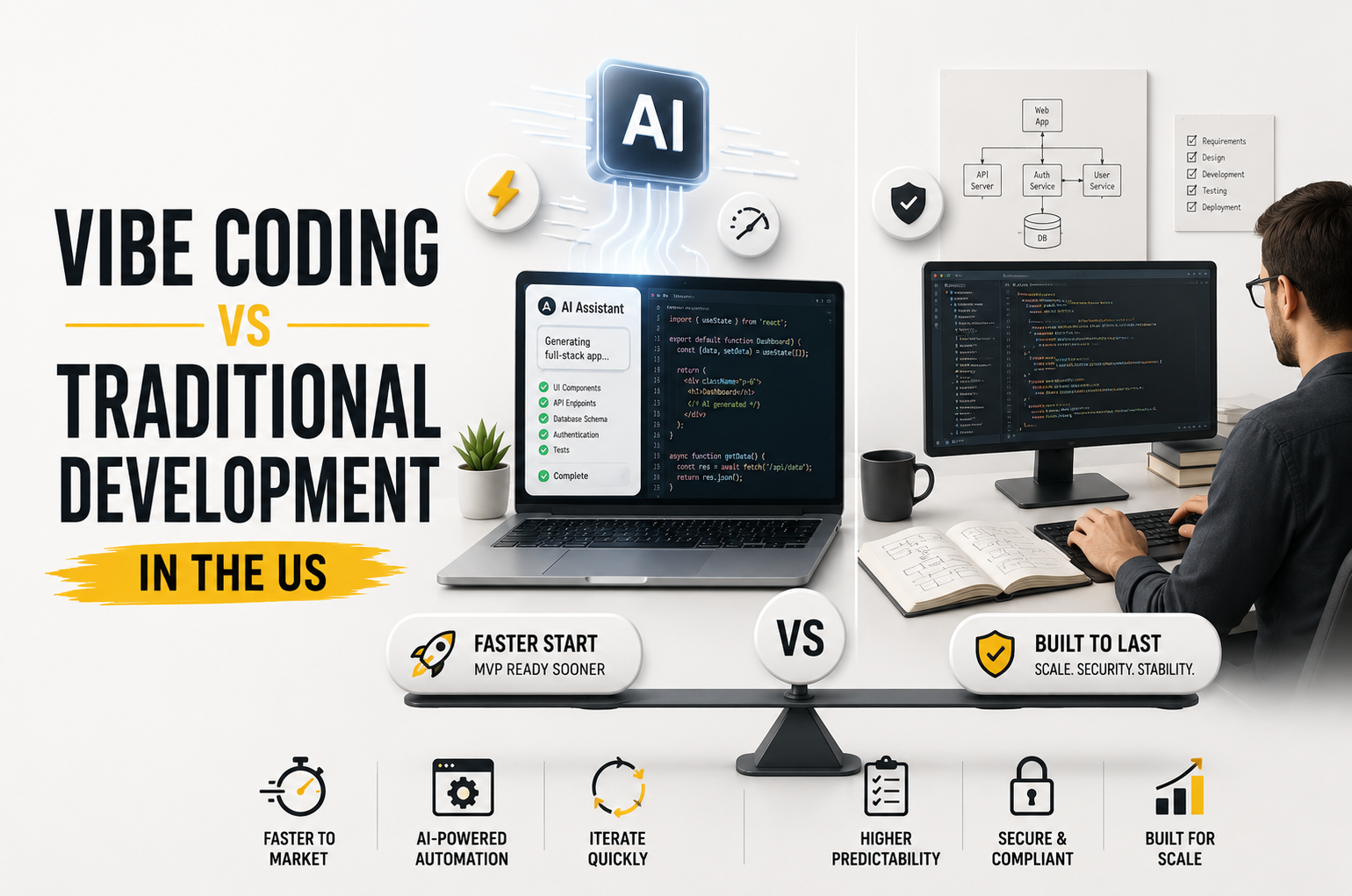
vibe coding cost vs traditional development cost in the USA usually favors vibe coding for early-stage builds and favors traditional development for complex, long-term products. The gap narrows fast once you add real infrastructure and scale requirements.
Traditional development in the US typically starts higher because every line is hand-written and reviewed from scratch. That upfront cost buys predictability, cleaner architecture, and fewer surprises later. Vibe coding compresses that upfront number by generating large chunks of code instantly, but it shifts cost downstream into review, refactoring, and hardening.
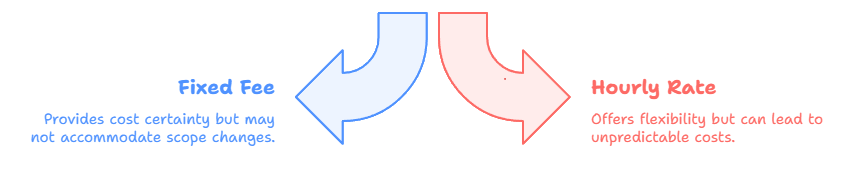
Fixed price vs hourly vibe coding pricing in the US Fixed-price vibe coding engagements suit well-scoped MVPs where requirements won't shift much. Hourly pricing fits projects with evolving scope, since vibe coding iterations often change direction mid-build based on what the AI output actually delivers. Most US teams pick fixed price for a first version and switch to hourly once the product moves into ongoing iteration.
For a straightforward MVP, vibe coding cost vs traditional development cost in the USA can look like a 40 to 60 percent savings on the initial build. That savings shrinks or disappears once you're building something with real compliance, security, or scale needs, where traditional development's upfront rigor pays off.
The smarter comparison isn't which one is cheaper in isolation, it's which one is cheaper for what you're actually building right now. A weekend MVP and a fundraising-ready product have different risk tolerances, and the honest vibe coding cost vs traditional development cost in the USA answer changes depending on which one you're building.
5. When you're shipping in the US, what counts as a reasonable vibe coding budget for a startup?
A reasonable vibe coding cost in the USA for an early-stage startup typically sits in the $5,000 to $25,000 range for a functional MVP, depending on how much custom logic and how many integrations the product needs. Below that range, expect a thinner product with fewer safeguards.
MVP cost vs full-product vibe coding cost An MVP focuses on the smallest version that proves the core value, so it typically costs a fraction of a full product build. Full-product vibe coding cost includes polish, edge-case handling, scalability work, and often a full security pass, which is why the number can double or triple the MVP figure.
Startups that budget realistically build in a review and hardening phase from day one instead of treating it as an optional add-on later. That single decision is usually what separates a startup that ships something stable from one that has to rebuild six months in. Arixlabs approaches early builds this way by design, pairing AI-generated speed with engineering review so the MVP budget actually buys something teams can scale, not just something that demos well once.
A realistic vibe coding cost in the USA budget also leaves a buffer for scope creep. Most first-time founders underestimate how much a "simple" feature request adds once it touches authentication, data storage, or a third-party API, and that buffer is what keeps the project from stalling halfway through.
6. When you're shipping in the US, do you get hidden costs in vibe coding builds?
Yes, hidden costs are common in vibe coding builds, and they usually show up after launch rather than during the build itself. The upfront cost to vibe code an app in the USA rarely includes the full picture of what keeps the product running.
Ongoing costs after a vibe-coded roll out, if you're shipping in the US Post-launch costs include hosting, monitoring, bug fixes for issues that surface under real traffic, and periodic refactoring as the codebase grows past what the AI originally generated cleanly. Security patching is another recurring cost, since AI-generated code can carry vulnerabilities that only surface under audit or after an incident.
Technical debt is the quiet one. Code generated fast without deep review tends to accumulate shortcuts that make future features harder to build. Teams that don't budget for a cleanup pass within the first six months often find their vibe coding cost in the USA effectively doubles once they account for the rework needed to keep scaling.
Third-party costs add up too. API usage fees, model inference costs for AI features, and paid integrations rarely appear in the initial cost to vibe code an app in the USA quote, but they show up on the first monthly bill after launch. Asking a provider to itemize these upfront avoids an unpleasant surprise later.
7. When you're shipping in the US, how do firms price vibe coding work?
Firms typically price vibe coding work using one of three models: fixed project fees, hourly rates, or milestone-based billing tied to features shipped. Each model changes how predictable your total vibe coding cost in the USA ends up being.
Fixed fees work best for clearly scoped MVPs where the deliverable is well defined upfront. Hourly billing suits ongoing or exploratory work, since vibe coding often involves iteration that's hard to scope precisely in advance. Milestone billing splits the difference, paying out as specific features or stages go live, which keeps both sides accountable to progress rather than just time spent.
Cost differences: in-house vs outsourced vibe coding In-house vibe coding costs show up as salary and tooling overhead, which is steady but requires the team to already have the skill in-house. Outsourced vibe coding shifts cost to a project or retainer fee, often cheaper for a single build but less predictable for ongoing product work. Most early-stage US startups outsource the first build, then bring capability in-house once the product has traction worth investing in permanently. Arixlabs works in hourly rates but gives an estimation of the timeline the project is going to take.
8. What's the way to you reduce vibe coding costs without cutting corners, if you're shipping in the US?
The most effective way to lower vibe coding costs in the USA without sacrificing quality is to define your scope clearly before development begins, not to reduce testing or code review later. A detailed specification minimizes unnecessary revisions, prevents scope creep, and keeps both hourly and fixed-price projects on budget.
Reusing proven components, workflows, and integration patterns is another effective way to control costs. Experienced vibe coding teams don't generate every feature from scratch—they build on reliable foundations that have already been tested. This reduces development time, shortens debugging cycles, and is one of the main reasons vibe coding can be more cost-effective than traditional software development when managed correctly.
Another important factor is choosing a development partner that treats AI-generated code as the starting point rather than the finished product. At ArixLabs, every vibe coding project includes structured engineering review, testing, and refinement to ensure the final application is reliable, secure, and ready for production. That combination of AI-assisted development and experienced engineering helps clients benefit from faster delivery without creating technical debt that becomes expensive after launch.
Phasing the project also helps control costs. Launching a focused MVP first and expanding based on real user feedback keeps the initial investment lower while reducing the risk of building features that customers never use. In practice, this approach consistently delivers more predictable budgets than attempting to build every feature in the first release.
Ultimately, the businesses that get the greatest value from vibe coding aren't simply choosing the lowest quote. They're working with experienced teams that know how to use AI efficiently, apply the right level of engineering oversight, and deliver software that's built to perform well long after the initial launch.
9. FAQ
What's the average cost of a vibe coding build, if you're shipping in the US?
Most MVPs land between $5,000 and $25,000, while fuller products with integrations and security review can run higher depending on complexity.
When you're shipping in the US, is vibe coding cheaper than traditional development? For early-stage MVPs, yes, often by 40 to 60 percent. That gap narrows once the product needs real scale, compliance, or complex architecture.
What drives the price difference between vibe coding providers, if you're shipping in the US?
Review depth, team seniority, and how many integrations the build requires are the biggest drivers of price variation between providers.
When you're shipping in the US, what ongoing costs come after a vibe-coded ship? Hosting, monitoring, security patching, and periodic refactoring are the main recurring costs teams should budget for after launch.
%20(1).jpg)

View more blogs



.png)
.png)

.png)
Ready to develop your own product? Get in touch today!
Get in Touch