



1. Understanding FlutterFlow Healthcare Apps
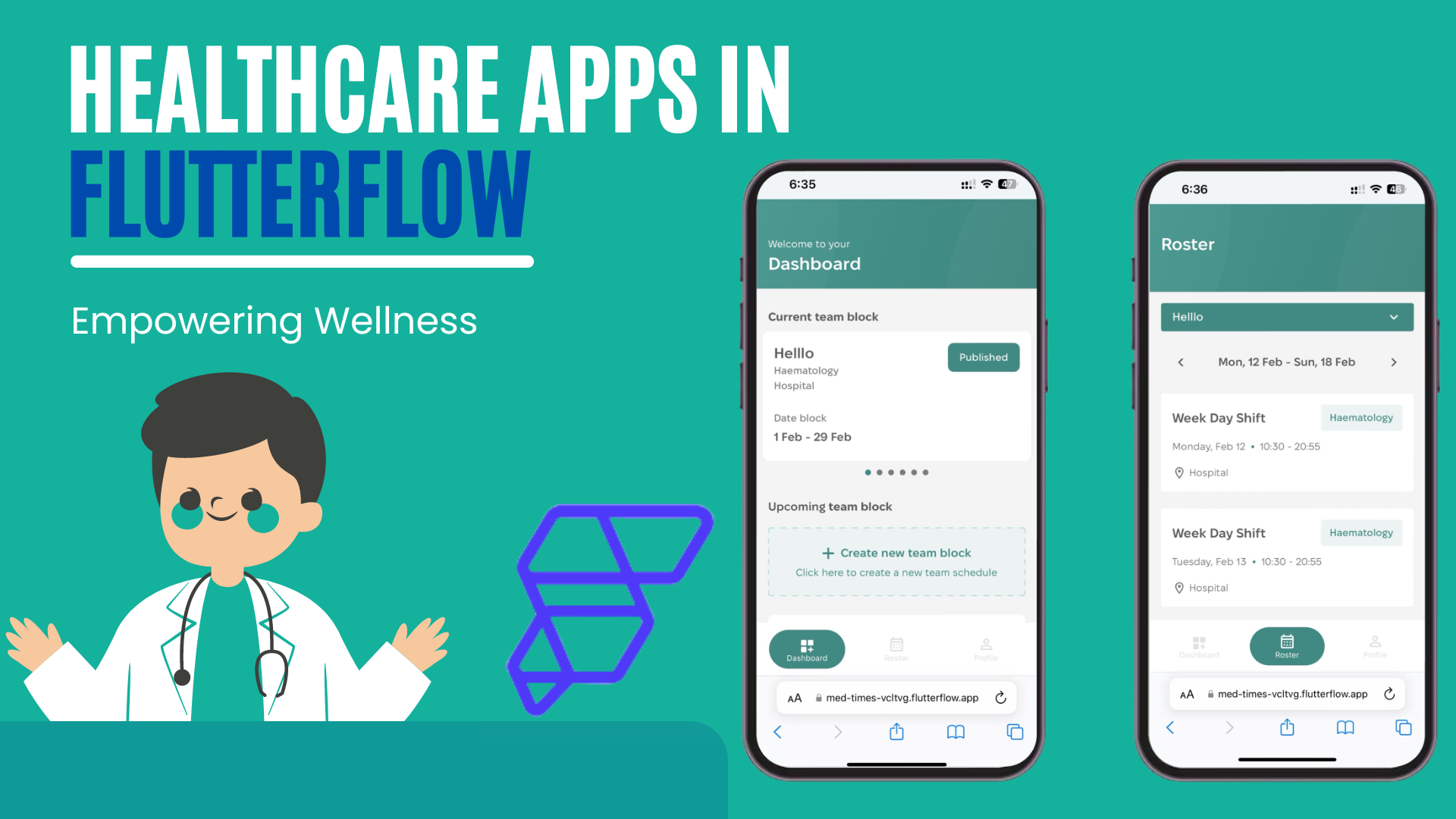
Building a healthcare app once required months of development, large teams, and extensive coding. Today, FlutterFlow makes the process much faster. With visual development, built-in backend integrations, and ready-to-use UI components, teams can quickly build healthcare apps such as appointment booking systems, consultation platforms, and patient dashboards—all without heavy coding. The result is faster development and quicker launches.
2. Why Healthcare App Development Is Booming in 2026
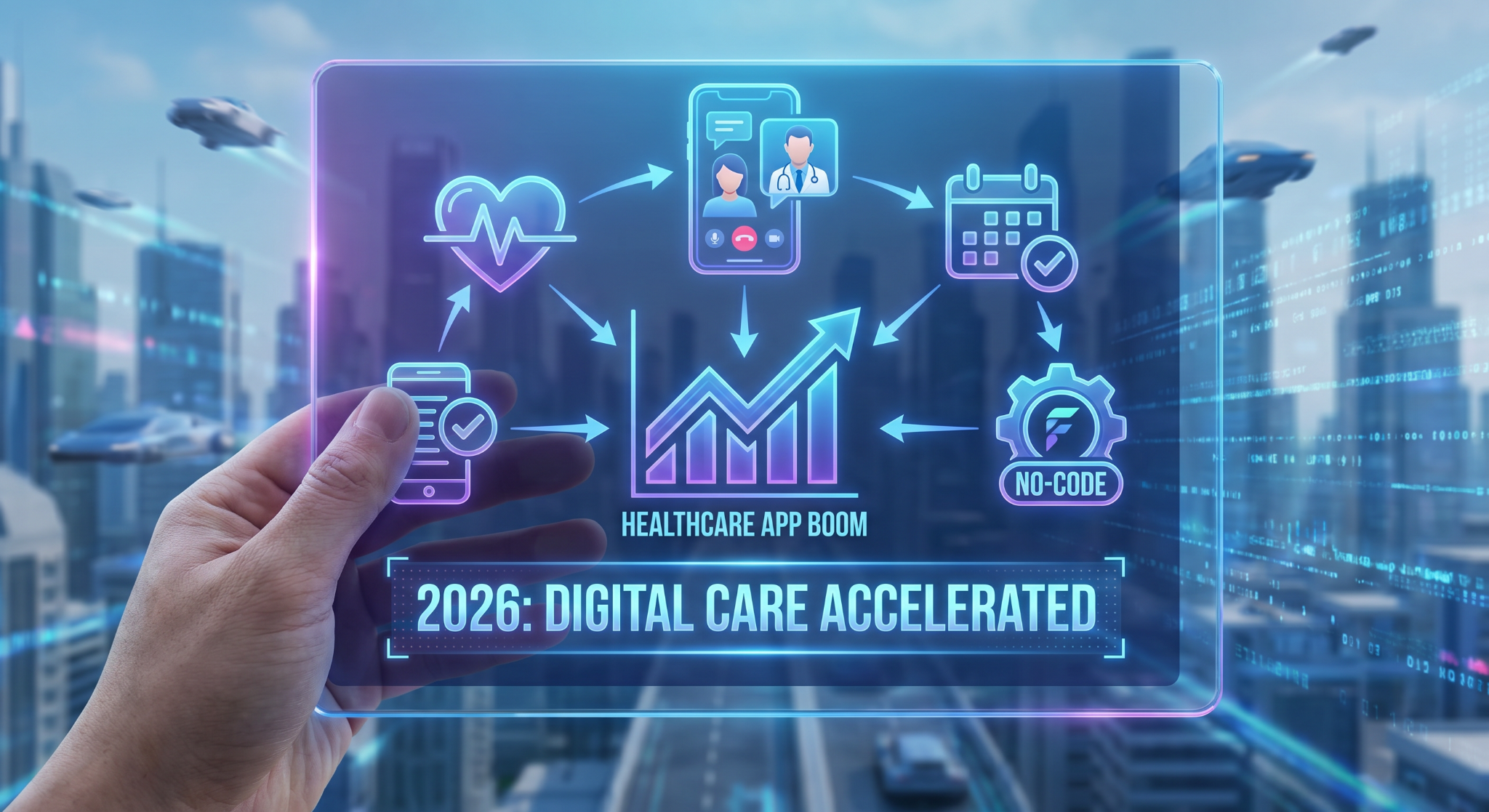
Healthcare didn’t suddenly go digital, it was pushed there. Remote consultations, mobile-first users, and faster access to care have made apps almost expected now.
That’s a big reason healthcare app development is growing so quickly in 2026. Patients don’t want to wait in queues if they can book, consult, or track everything from their phone.
Another shift? Speed of building.
Traditional development struggles to keep up with changing requirements. That’s where no-code healthcare apps step in. Teams can test ideas, launch faster, and update features without long delays.
Tools like FlutterFlow app development make this even more practical. You’re not just designing, you’re actually building and deploying usable products.
There’s also the rise of remote care. Telemedicine app development is no longer optional; it’s becoming a standard feature across healthcare platforms.
3. Types of Healthcare Apps You Can Build
Healthcare apps come in many forms, each solving a specific problem. Telemedicine apps enable virtual consultations through video calls, while patient management apps help organize medical records and histories. Appointment booking apps simplify scheduling, and health tracking apps monitor metrics like steps, sleep, or heart rate.
Many modern healthcare apps combine these features into a single platform. With FlutterFlow, you can build anything from a simple booking app to a complete healthcare solution—starting with the features that matter most.
4. Core Features Every Healthcare App Needs
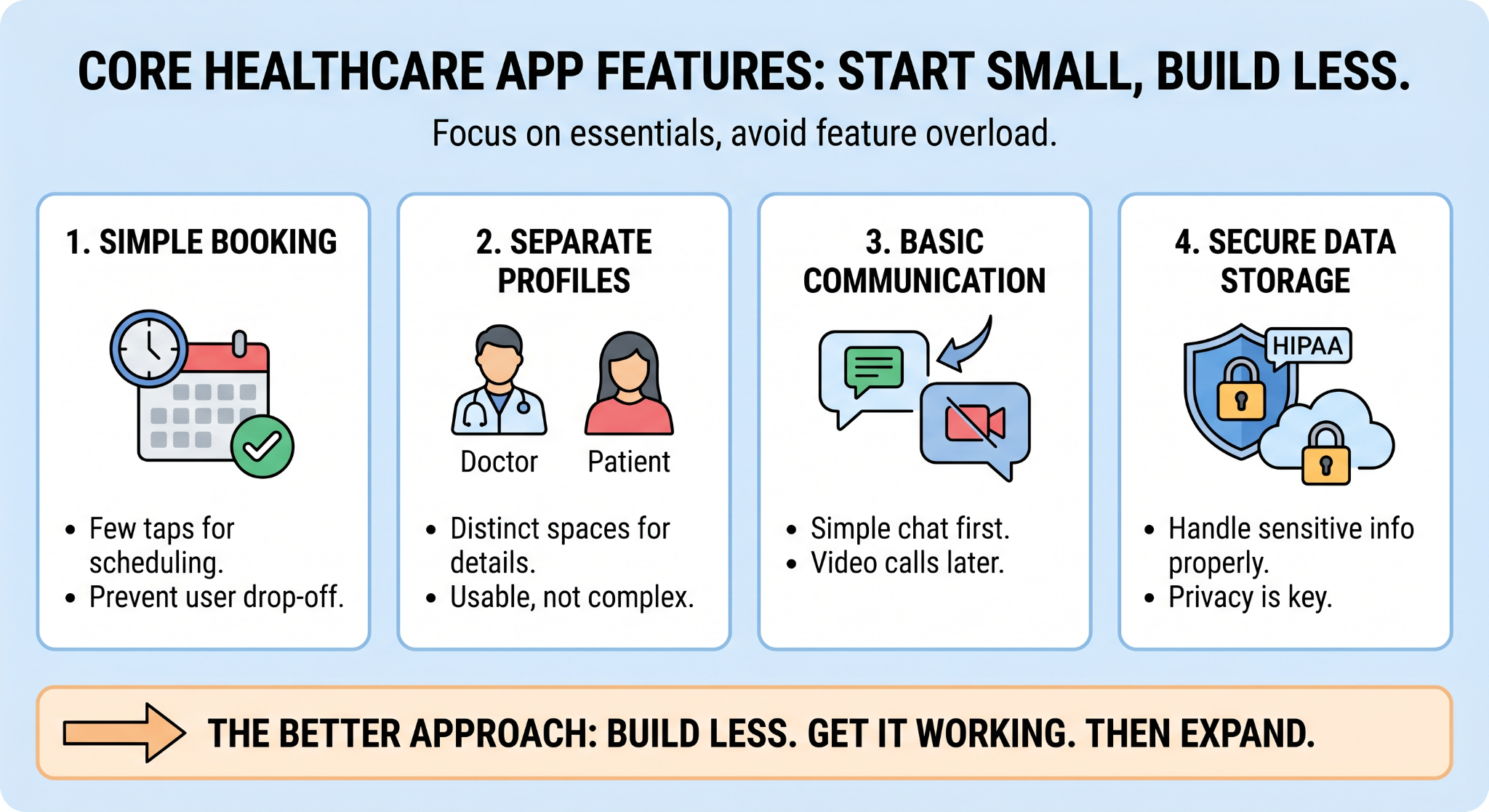
Most healthcare apps don’t fail because of tech, they fail because they try to do too much, too early.
You really don’t need a long feature list.
Start with the basics that people actually use. Booking, for example. If scheduling takes more than a few taps, users drop off. It’s that simple.
Then profiles. Doctors and patients need separate spaces to manage their details. Nothing complicated, just enough to make the app usable.
Communication comes next, but not always in the way people expect. Everyone jumps straight to video calls because of telemedicine app development, but even a simple chat can work in early versions.
Now the tricky part, data. Healthcare apps deal with sensitive information, so storage isn’t just about saving data. It has to be handled properly. This is where HIPAA compliant app development starts becoming important, even if you’re not fully there yet.
Other things like notifications or tracking can come later.
The better approach? Build less. Get it working. Then expand.
5. Security & Compliance in Healthcare Apps
This is the part most people underestimate, until it becomes a problem.
Healthcare apps don’t just store data. They handle personal, sensitive information. One mistake here can break user trust instantly.
Even if you’re building a simple app, you can’t ignore security. Basic things like authentication, access control, and encrypted storage should be there from the start.
Now, when people hear HIPAA compliant app development, it sounds heavy. And yes, full compliance takes effort. But the mindset starts early, limit who can access data, store only what you need, and make sure it’s protected.
It’s not just about rules. It’s about responsibility.
Backend tools matter here too. Whether you’re using Firebase or APIs, the way data flows through your app needs to be controlled and secure.
Most teams try to add security later. That usually backfires.
Better approach? Build with it in mind from day one.
6. Building a Healthcare App with FlutterFlow (Step-by-Step)
There’s no perfect process, but most apps follow a similar path.
Start with clarity. What exactly are you building? A consultation app, booking system, or something else? Skipping this step usually leads to rework later in healthcare app development.
Then move to design. With FlutterFlow app development, you can quickly lay out screens, login, dashboard, booking flow, without worrying about code first.
Next is data. Set up your database, define what gets stored, and how users interact with it. This part matters more than the UI in the long run.
After that, connect things. APIs, authentication, maybe video tools if you’re working around telemedicine app development.
Testing comes next. Not just “does it work,” but “does it make sense to use?” Small friction points show up here.
Finally, launch. And expect to change things.
That’s the real cycle, build, test, adjust. Not a one-time process.
7. Why FlutterFlow Makes Sense for Healthcare Apps
Not every tool fits healthcare. But this one does, for a few practical reasons.
Speed is the obvious one. With FlutterFlow app development, you can go from idea to a working app much faster than traditional builds. That alone changes how teams approach healthcare app development.
Cost is another factor. You don’t need a full engineering team just to get started. That’s why no-code healthcare apps are becoming a realistic option, not just an experiment.
There’s also flexibility. You can change flows, update features, or fix issues without rebuilding everything. In healthcare, where requirements shift often, that matters.
And then there’s control. Even though it’s visual, you’re still working with real data, real integrations, real users.
It’s not perfect, no tool is. But if the goal is to build faster and iterate without friction, it’s a strong option.
8. Common Challenges (And What Actually Trips Teams Up)
Most issues don’t show up at the start. They show up after the app is live.
Data handling is one. It’s easy to store information, but managing access, permissions, and updates gets messy fast. This is where ignoring HIPAA compliant app development early can create bigger problems later.
Then come integrations. Connecting video tools, payment systems, or external APIs sounds simple until things break in real use.
User experience is another weak spot. Healthcare apps aren’t used casually, people expect them to just work. If booking fails or calls drop, they won’t come back.
And sometimes, it’s overbuilding. Trying to include too many features at once slows everything down, especially in healthcare app development.
None of these are deal-breakers. But they’re the kind of things teams only notice once users start interacting with the app.
9. Conclusion
Healthcare apps are no longer a luxury—they've become an expectation. In 2026, the biggest shift isn't just growing demand, but how quickly these apps can be built and improved. With FlutterFlow, teams can launch faster, test ideas early, and iterate without lengthy development cycles.
Success often comes from solving one problem well rather than building everything at once. Start small, learn from users, and expand over time—that's how many successful healthcare products begin.
%20(1).jpg)

View more blogs
.png)

.png)
.png)

.png)


Ready to develop your own product? Get in touch today!
Get in Touch