



1. Why Rental Marketplace Apps Are Still Winning in 2026
People don’t just book hotels anymore. They look for spaces that fit how they actually live — a quiet place to work, a weekend villa, or even a long-term rental. That shift is why vacation rental app development keeps growing.
And here’s the interesting part, it’s no longer about building the next big platform. Smaller, focused apps are winning. If you’re building a FlutterFlow rental marketplace app for a specific audience, you already have an edge.
But expectations are high. Users want instant booking, accurate availability, and zero friction. That’s where solid marketplace app features make the difference, not just having them, but making them work smoothly.
What changed everything is how fast you can build now. Creating an Airbnb clone app doesn’t take months anymore. You can move quickly, just don’t skip the basics that actually matter.
2. What Makes a Great Rental Marketplace App
Most people start by listing features. Search, booking, payments, done, right? Not really. A good rental app isn’t about how many features you add, it’s about how naturally they connect.
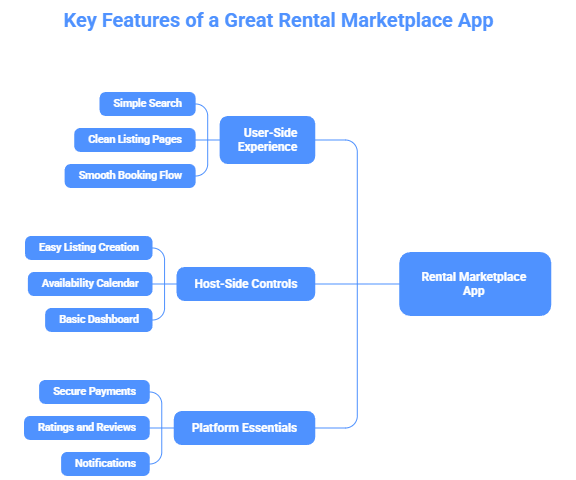
Let’s break down the marketplace app features that actually matter.
User-side experience
This is where first impressions happen. If users can’t quickly find what they want, they leave.
- Simple search with filters (location, price, dates)
- Clean listing pages with images and key details
- Smooth booking flow without too many steps
One small delay or confusion here, and you lose the booking.
Host-side controls
Hosts are the supply side. If they struggle, your platform struggles.
- Easy listing creation (images, pricing, rules)
- Availability calendar that actually reflects real-time changes
- Basic dashboard to manage bookings
Many apps overlook this. They focus on users, but forget hosts need clarity too.
Platform essentials
This is the layer that holds everything together.
- Secure payments
- Ratings and reviews
- Notifications for bookings and updates
Without these, the system feels incomplete, even if everything else looks good.
Here’s the key thing most founders miss: features alone don’t build a product. Flow does. The way a user moves from search → listing → booking should feel obvious, almost effortless.
That’s what separates a basic idea from something people actually use.
3. Can You Really Build an Airbnb Clone Without Coding?
Yes, but it’s not as effortless as it sounds.
You can build an Airbnb clone app without coding, but you still need to understand how your app works behind the scenes. No-code tools simplify development, they don’t remove thinking.
With FlutterFlow app development, you design screens visually, connect your database, and define logic without writing code. That makes building faster, especially for MVPs.
What it helps with:
- Faster UI creation
- Easier backend setup
- Quick iterations
What it doesn’t fix:
- Poor user flows
- Broken booking logic
That’s where most people struggle. They rely on the tool instead of understanding the product.
Used properly, though, it’s a major advantage. You can build, test, and improve your app without starting from scratch every time.
4. Step-by-Step: Building a FlutterFlow Rental Marketplace App
Most builds don’t fail because of tech, they fail because the flow isn’t thought through. Keep it simple and build in order.
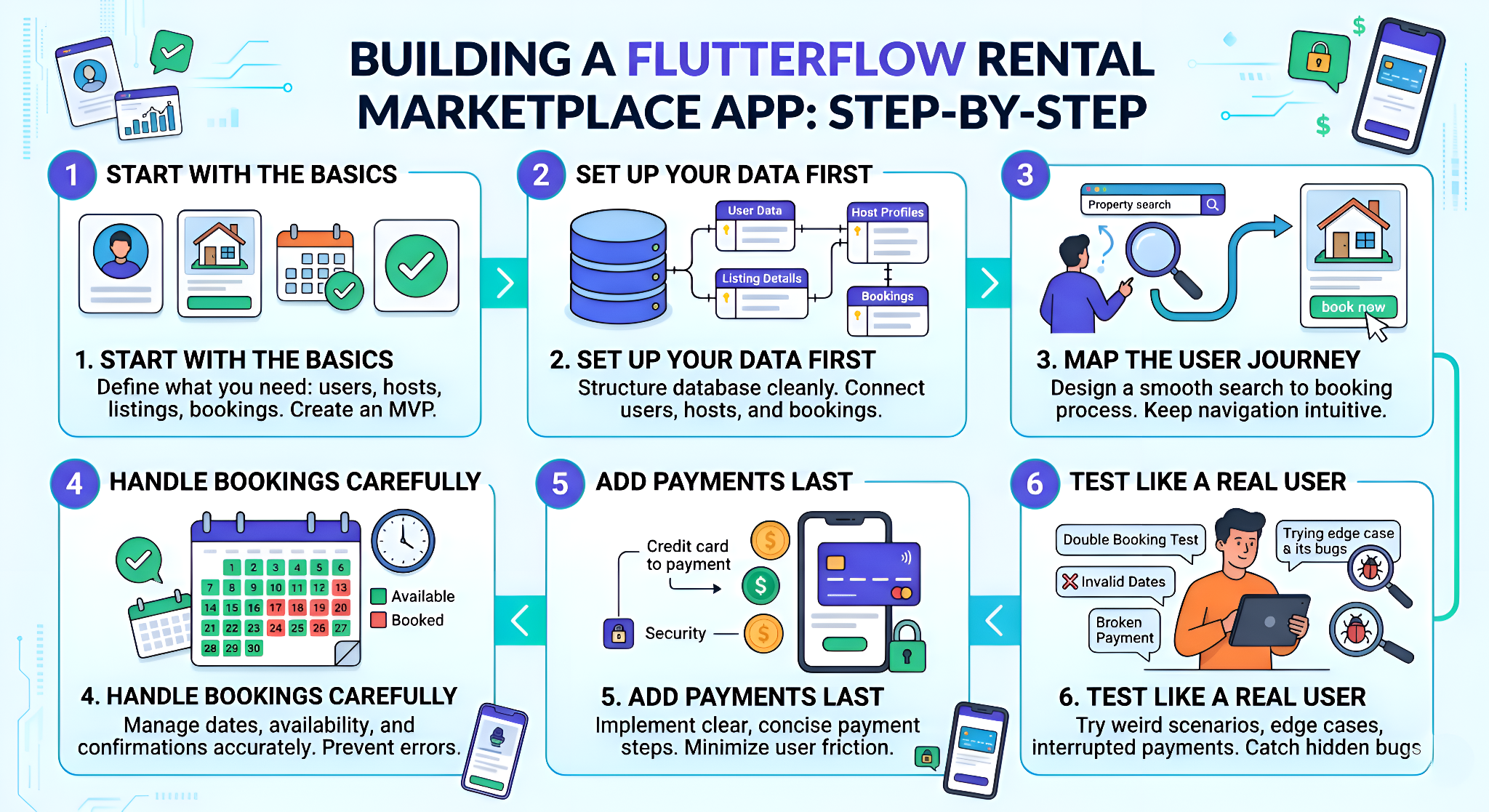
If you’re creating a FlutterFlow rental marketplace app, this structure works.
Start with the basics
List what you actually need: users, hosts, listings, bookings. Don’t try to build everything at once. A small, working version beats a complex broken one.
Set up your data first
Your database decides how everything connects. Listings, users, and bookings should relate cleanly, otherwise you’ll run into issues later.
Map the user journey
Think like a user. Can someone go from search to booking without confusion? If not, fix the flow before adding features.
Handle bookings carefully
Dates, availability, confirmations, this is where things can break. Even a small mistake here can create double bookings or failed reservations.
Add payments last
Keep the payment step short and clear. The more steps you add, the more users drop off.
Test like a real user
Try weird cases, same dates, wrong inputs, interrupted payments. That’s where most bugs hide.
There’s no magic here. Just building in the right order.
5. Timeline and Real Expectations
Most people expect a straight answer here. Two weeks? A month?
It rarely works like that.
You can put together a working version of a FlutterFlow rental marketplace app fairly quickly, especially if you keep things lean. But timelines stretch the moment you start rethinking flows or adding “just one more feature.”
The surprising part? Screens aren’t what slow you down.
It’s the small decisions:
- How bookings should behave when dates overlap
- What happens when a payment fails halfway
- How users move between search and checkout without confusion
That’s where FlutterFlow app development feels fast at first, then slows down if the structure isn’t clear. Every tweak touches multiple parts of the app.
Also, the first version is rarely the final one. You build something, test it, notice friction, fix it, and repeat. That loop is where most of the time actually goes.
So timelines aren’t just about building. They’re about how many times you need to adjust before it feels right.
6. Is FlutterFlow Ready for Production Apps?
Short answer, yes, if you build it right.
A lot of early concerns around no-code tools were about reliability. But things have changed. With the right structure, a FlutterFlow rental marketplace app can handle real users, real bookings, and real transactions.
What makes it work in production isn’t just the tool, it’s how you use it.
With FlutterFlow app development, you get:
- Fast UI building with consistent design
- Direct integration with backend services
- Ability to iterate without rebuilding everything
That’s a strong base for launching and growing a marketplace app.
But production readiness comes down to decisions. Clean data structure, clear user flows, and stable booking logic matter more than anything else. If those are solid, the app holds up.
This also answers a common question: is it just for MVPs?
Not anymore. You can go beyond MVP, as long as you don’t treat it like a shortcut.
Build it properly, and it scales with you.
7. Conclusion
Building a rental marketplace used to be slow, expensive, and heavily dependent on developers. That’s no longer the case.
You can now build a working Airbnb clone app faster than ever, but speed alone isn’t what makes it successful. The difference comes down to structure, flow, and how well your app handles real usage.
A well-built FlutterFlow rental marketplace app isn’t just about launching quickly. It’s about creating something that people can actually use without friction, smooth booking, clear listings, and reliable interactions.
If you focus on getting the fundamentals right, you don’t need a massive build to start. You need a version that works, learns from users, and improves over time.
That’s how strong marketplace apps are built now, not all at once, but step by step.
%20(1).jpg)

View more blogs
.png)




%20(1).png)
.png)
Ready to develop your own product? Get in touch today!
Get in Touch